Category Archives: KPV

KPV (Lysine–Proline–Valine) is a short-chain tripeptide fragment derived from the C-terminal end of alpha-melanocyte-stimulating hormone (α-MSH). It is commonly utilized in laboratory and preclinical research settings for its role in studying cellular signaling pathways related to inflammatory response modulation and epithelial barrier function.

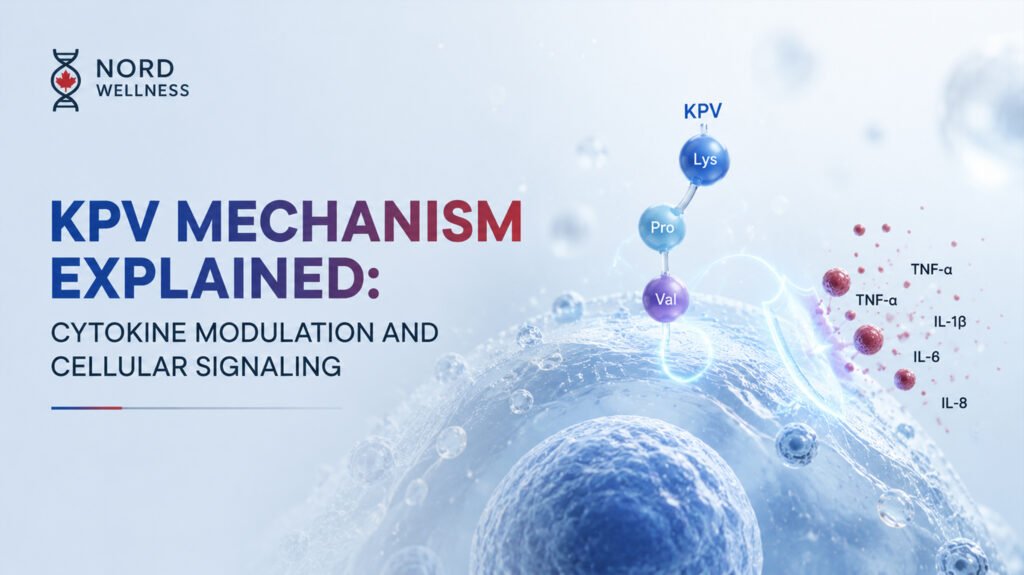
KPV Mechanism Explained: Cytokine Modulation and Cellular Signaling

kpv-mechanism-explained-cytokine-modulation-and-cellular-signaling

In peptide research, KPV mechanism is often discussed in relation to inflammatory signaling, cytokine expression, epithelial barrier function, and immune-cell communication. KPV consists of three amino acids—lysine, proline, and valine—and researchers identify it as the C-terminal fragment of alpha-melanocyte-stimulating hormone (α-MSH). Research literature has described KPV as one of the small α-MSH-related peptide fragments associated […]

KPV Peptide: Structure, Anti-Inflammatory Role, and Research Applications

kpv-peptide-structure-anti-inflammatory-role-and-research-applications

In peptide research, few small molecules have attracted as much interest for inflammation-related signaling as KPV peptide. Although it contains only three amino acids, KPV is studied because it represents a biologically active fragment of alpha-melanocyte-stimulating hormone, often written as α-MSH. This makes KPV especially relevant in research involving cytokine activity, immune signaling, inflammatory pathways, […]