

Aesthetics & Libido, Melanotan II, Peptides
How Melanotan II Works: Melanocortin Receptors and Peptide Signaling
Summarize the article with:
 ChatGPT
 Claude
 Perplexity
 Google AI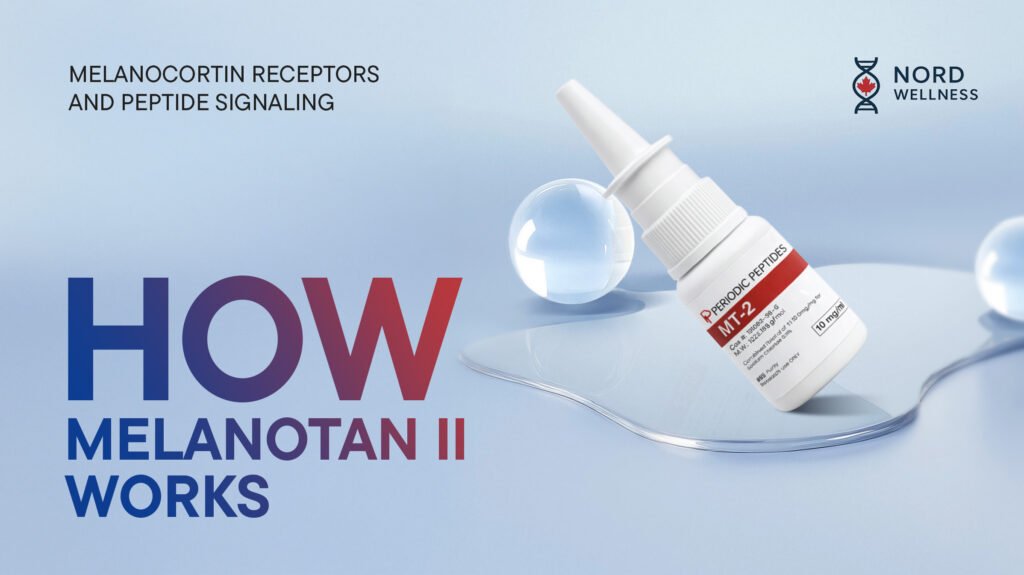
Apr
Overview of Melanotan II Function
Understanding how melanotan ii works begins with its origin as a synthetic analog of α-MSH (alpha-melanocyte-stimulating hormone)—a naturally occurring peptide involved in regulating pigmentation, energy balance, and neuroendocrine signaling.
Melanotan II was structurally modified to improve:
- Stability against enzymatic breakdown
- Binding affinity to melanocortin receptors
- Duration of biological activity
Rather than acting on a single pathway, Melanotan II interacts with a network of melanocortin receptors, making it a multi-target peptide in research settings. Explore more science-backed wellness insights and advanced health solutions at Nord Wellness.
👉 For a deeper breakdown of its structure and delivery, see: Melanotan II peptides: mechanism, research insights & delivery methods
Interaction with Melanocortin Receptors (MC1R–MC4R)
A key part of how Melanotan II works lies in its interaction with the melanocortin receptor family, which are G protein-coupled receptors (GPCRs).
Primary receptors involved:
MC1R (Melanocytes)
- Located on melanocytes (skin pigment cells)
- Activation stimulates melanin synthesis, particularly eumelanin
MC3R (Central and Peripheral Tissues)
- Involved in energy homeostasis and metabolic signaling
- Plays a role in regulating nutrient partitioning
MC4R (Central Nervous System)
- Strongly associated with appetite regulation and neuroendocrine signaling
- One of the most studied receptors in metabolic research
Melanotan II is considered a non-selective agonist, meaning it can activate multiple melanocortin receptors rather than targeting just one.

Signal Transduction Pathways
At the cellular level, understanding how melanotan ii works requires examining the signaling cascade initiated after receptor binding.
Key pathway (simplified):
- Melanotan II binds to melanocortin receptor (e.g., MC1R)
- Activation of G protein (Gs)
- Increase in adenylate cyclase activity
- Rise in cyclic AMP (cAMP) levels
- Activation of protein kinase A (PKA)
- Upregulation of transcription factors such as MITF (microphthalmia-associated transcription factor)
This cascade ultimately leads to:
- Increased expression of enzymes like tyrosinase
- Enhanced melanin synthesis within melanocytes
This signaling pathway is central to many of the observed biological effects in research studies.

Effects on Melanocytes and Pigmentation
One of the most well-documented outcomes of this signaling pathway is its effect on melanocytes, the cells responsible for producing pigment in the skin.
Observed cellular effects:
- Increased production of eumelanin (darker pigment)
- Enhanced melanosome formation and distribution
- Greater responsiveness of melanocytes to signaling stimuli
These changes are the basis for research into:
- Pigmentation regulation
- Skin response to environmental exposure
- Melanin-related biological processes
Neuroendocrine Signaling Considerations
Beyond pigmentation, how Melanotan II works also involves its interaction with the central melanocortin system, particularly through MC3R and MC4R.
Neuroendocrine-related pathways include:
- Hypothalamic signaling related to appetite and satiety
- Modulation of dopaminergic and reward pathways
- Influence on hormonal signaling networks
Research observations:
- Changes in appetite signaling behavior
- Activation of pathways associated with libido
- Interaction with broader neuroregulatory systems
These effects highlight the system-wide influence of melanocortin receptor activation, extending far beyond skin-related functions.
Conclusion
A complete understanding of how melanotan ii works involves recognizing its role as a multi-receptor agonist within the melanocortin system.
By activating receptors such as MC1R, MC3R, and MC4R, Melanotan II initiates signaling cascades that influence:
- Pigmentation processes
- Cellular signaling pathways
- Neuroendocrine functions
Its broad receptor activity and enhanced stability make it a valuable compound for studying complex biological signaling networks in research environments.
Interested in exploring Melanotan II for research purposes?
- ✔️ Structured peptide formulations
- ✔️ Consistent quality standards
- ✔️ Research-focused sourcing
👉 Shop Melanotan II peptides at Nord Wellness
Disclaimer
This content is provided by Nord Wellness for educational and research purposes only. Melanotan II is not approved for the diagnosis, treatment, cure, or prevention of any disease.



Great article—really like how it explains Melanotan II as a non-selective agonist rather than targeting just one receptor. The way it interacts with multiple melanocortin receptors makes the signaling pathway much more complex and interesting
I appreciate how the article breaks down the signaling cascade clearly. The connection between receptor activation and melanin production at the cellular level is explained in a very easy-to-follow way.
Very informative read. What stands out is how melanocortin receptors are involved in more than just pigmentation, including appetite and neuroendocrine signaling, which shows how interconnected these systems are.