

Aesthetics & Libido, Melanotan II, Peptides
Melanotan II Peptides: Mechanism, Research Insights & Delivery Methods
Summarize the article with:
 ChatGPT
 Claude
 Perplexity
 Google AI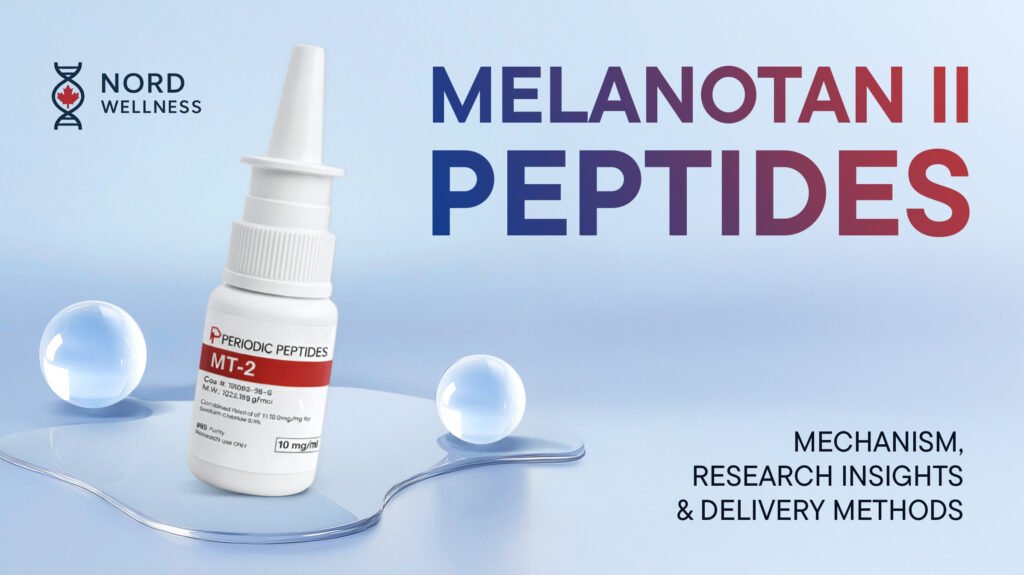
Apr
What is Melanotan II Peptides?
Melanotan II peptides are synthetic analogs derived from the naturally occurring hormone α-MSH (alpha-melanocyte-stimulating hormone), which plays a role in regulating pigmentation processes in the body.
Originally developed for research into skin photoprotection and pigmentation pathways, Melanotan II has since been widely studied for its interaction with the melanocortin receptor system. Additionally, unlike endogenous peptides, Melanotan II is structurally modified to improve stability and extend its activity within biological systems.
From a research perspective, it is primarily explored for its ability to influence melanin production, making it relevant in studies related to skin response, UV exposure, and pigment regulation. To learn more about advanced wellness and skin health solutions, explore Nord Wellness.
👉 Explore high-quality Melanotan II peptides for research purposes
Structure and Mechanism of Action
Melanotan II is a cyclic heptapeptide, meaning its structure contains seven amino acids arranged in a stabilized cyclic configuration. As a result, this modification enhances resistance to enzymatic degradation and allows for longer activity compared to its natural counterpart.

Mechanism of action (research context):
- Interacts with melanocortin receptors (MC1R, MC3R, MC4R, MC5R)
- Most notably activates MC1R, which is associated with melanin synthesis
- Stimulates pathways that lead to increased production of eumelanin, the pigment responsible for darker skin tones
This receptor-based interaction has made Melanotan II a subject of interest not only in pigmentation research, but also in broader studies involving metabolic regulation and neuroendocrine signaling. As a result, it continues to attract attention across multiple areas of peptide research.
Research Applications
Within controlled research environments, Melanotan II peptides have been studied across several domains, including:
1. Pigmentation and UV Response Studies
- Investigating how increased melanin production may influence skin response to UV exposure
- Exploring potential photoprotective mechanisms at the cellular level
2. Melanocortin System Research
- Understanding the role of melanocortin receptors in biological signaling
- Studying how peptide analogs interact with receptor subtypes
3. Metabolic and Neurobehavioral Research
- Examining indirect pathways involving appetite regulation and energy balance
- Exploring central nervous system interactions linked to melanocortin signaling
It is important to note that these applications are limited to scientific and laboratory research contexts.
Safety and Tolerability Overview
Research into Melanotan II peptides has also examined safety profiles and tolerability under controlled conditions.
Observations reported in studies include:
- Dose-dependent physiological responses
- Transient reactions related to receptor activation
- Variability depending on administration protocols
However, comprehensive long-term safety data remains limited, and further research is required to fully understand its biological impact.
As with all research compounds, Melanotan II is handled within structured experimental frameworks and is not intended for clinical or therapeutic use outside of approved studies. Therefore, its application remains limited to controlled research settings.
Delivery Methods and Administration Routes
In research settings, various delivery methods are explored to better understand peptide absorption, stability, and bioavailability.
Common administration routes studied:
1. Subcutaneous Injection
- Frequently used in research due to relatively stable absorption
- Allows for controlled dosing and predictable pharmacokinetics
2. Intranasal Delivery
- Investigated as a non-invasive alternative
- Studies focus on absorption efficiency through mucosal membranes
3. Other Experimental Routes
- Additional delivery systems may be explored depending on study design
- Includes variations in formulation to assess stability and release patterns
Each method presents different variables in terms of onset, duration, and systemic interaction, therefore making delivery mechanisms an important area of ongoing research.
Related Melanocortin Peptides
Melanotan II belongs to a broader class of melanocortin-related peptides, which are studied for their interaction with the same receptor system. Similarly, these compounds share common mechanisms of receptor binding and signaling pathways.

Common related compounds include:
Melanotan I (Afamelanotide)
- More selective for MC1R
- Studied for targeted pigmentation pathways
PT-141 (Bremelanotide)
- Primarily interacts with central melanocortin receptors
- Explored in neuroendocrine research contexts
Other α-MSH analogs
- Designed to isolate specific receptor interactions
- Used to better understand melanocortin signaling pathways
In addition, these compounds provide a comparative framework for studying receptor selectivity, biological response, and peptide design optimization.
👉 SEE MORE:
- Melanotan II Benefits: Research Insights on Pigmentation and Melanocortin Activity
- Melanotan II Side Effects: Observations and Research Considerations
- How Melanotan II Works: Melanocortin Receptors and Peptide Signaling
- Melanotan Peptide Mechanism: Understanding α-MSH Analogs and Receptor Activity
- Melanotan II Nasal Spray: Intranasal Delivery and Absorption Considerations
Conclusion
Melanotan II peptides continue to be an important subject within peptide research, particularly in studies involving pigmentation, receptor signaling, and biological response mechanisms. Furthermore, its enhanced stability and broad receptor interaction profile make it a valuable model compound for exploring the melanocortin system. However, continued research is necessary to better understand its full range of biological effects and safety considerations.
Disclaimer
This content is provided by Nord Wellness for educational and research purposes only. Melanotan II is not approved for the diagnosis, treatment, cure, or prevention of any disease.


I like how the article explains MT-II as a non-selective melanocortin agonist. The fact that it activates multiple receptors (MC1R, MC3R, MC4R) really explains why it has such a broad range of effects beyond just pigmentation.
The comparison between injection and nasal delivery was interesting. Since bioavailability is lower with nasal sprays, do you think most research still favors subcutaneous administration for consistency
What stood out to me is how MT-II increases melanin production through the cAMP pathway and tyrosinase activation. It’s a good example of how peptide design can directly influence cellular signaling
Pingback: Melanotan II Side Effects: Observations and Research Considerations - nordwellness.ca
Pingback: Melanotan II Benefits: Research Insights on Pigmentation and Melanocortin Activity - nordwellness.ca
Pingback: How Melanotan II Works: Melanocortin Receptors and Peptide Signaling - nordwellness.ca
Pingback: Melanotan Peptide Mechanism: Understanding α-MSH Analogs and Receptor Activity - nordwellness.ca
Pingback: Melanotan II Nasal Spray: Intranasal Delivery and Absorption Considerations - nordwellness.ca