

Aesthetics & Libido, Melanotan II, Peptides
Melanotan Peptide Mechanism: Understanding α-MSH Analogs and Receptor Activity
Summarize the article with:
 ChatGPT
 Claude
 Perplexity
 Google AI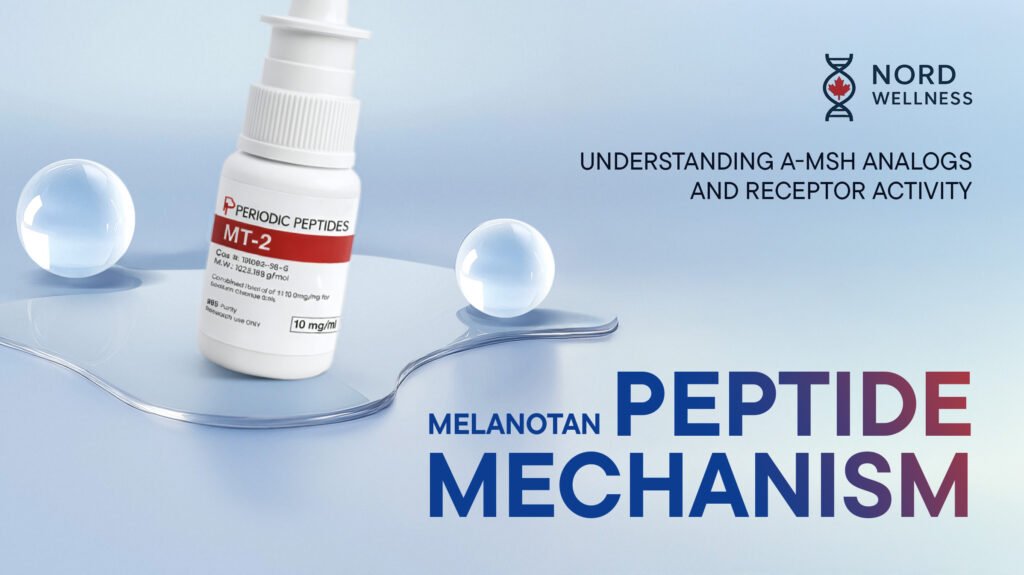
Apr
What Are Melanotan Peptides?
To understand the melanotan peptide mechanism, it is important to first define what melanotan peptides are.
Melanotan peptides are synthetic analogs of α-MSH (alpha-melanocyte-stimulating hormone)—a naturally occurring peptide hormone involved in regulating pigmentation, energy balance, and neuroendocrine activity. Learn more about cutting-edge wellness research and peptide innovation at Nord Wellness.
These compounds were developed to:
- Mimic the biological activity of α-MSH
- Improve stability and resistance to enzymatic degradation
- Enhance binding affinity to melanocortin receptors
The two most commonly studied variants are:
- Melanotan I (Afamelanotide)
- Melanotan II, a more broadly acting analog with activity across multiple receptor subtypes
👉 For a detailed breakdown of Melanotan II specifically, see: Melanotan II Peptides: Mechanism, Research Insights & Delivery Methods
α-MSH Analog Structure
A core aspect of the melanotan peptide mechanism lies in the structural modifications made to α-MSH.
Natural α-MSH characteristics:
- Linear peptide
- Rapidly degraded by enzymes
- Short biological half-life
Melanotan peptide modifications:
- Cyclization (in Melanotan II) → increases structural stability
- Amino acid substitutions → improve receptor binding
- Resistance to proteolytic enzymes → extends duration of action

For example, Melanotan II is a cyclic heptapeptide, which allows it to maintain its shape and interact more effectively with melanocortin receptors over time. These structural changes are essential to understanding why synthetic analogs behave differently from natural peptides.
Receptor Binding Mechanisms
The defining feature of the melanotan peptide mechanism is its interaction with the melanocortin receptor family (MC1R–MC5R), which are part of the G protein-coupled receptor (GPCR) class.
Key receptor interactions:
MC1R (Melanocytes)
- Primary receptor involved in pigmentation
- Activation increases melanin synthesis
MC3R & MC4R (Central Nervous System)
- Involved in appetite regulation and energy balance
- Play roles in neuroendocrine signaling
Melanotan peptides act as agonists, meaning they bind to these receptors and activate them, initiating downstream signaling processes.
Selectivity differences:
- Melanotan I → more selective for MC1R
- Melanotan II → non-selective, activates multiple receptor types
This difference in receptor selectivity leads to variations in observed biological effects.

Molecular Signaling Pathways
At the molecular level, the melanotan peptide mechanism involves a well-characterized signaling cascade.
Primary signaling pathway:
- Peptide binds to melanocortin receptor
- Activation of Gs protein
- Stimulation of adenylate cyclase
- Increase in cAMP (cyclic AMP)
- Activation of protein kinase A (PKA)
- Regulation of gene expression via transcription factors such as MITF
Downstream effects:
- Increased tyrosinase activity
- Enhanced melanin production
- Changes in cellular signaling behavior
This pathway is especially relevant in melanocytes, where it directly influences pigmentation processes.
Differences Between Melanotan Compounds
Understanding the melanotan peptide mechanism also requires comparing different analogs and their biological behavior.
Melanotan I (Afamelanotide):
- Higher selectivity for MC1R
- Primarily studied for pigmentation-specific pathways
Melanotan II:
- Non-selective receptor activation
- Broader interaction with MC1R, MC3R, MC4R
- Associated with both pigmentation and neuroendocrine signaling
Key differences:
- Receptor specificity
- Range of biological effects
- Stability and duration of action
Conclusion
The melanotan peptide mechanism is centered on the interaction between synthetic α-MSH analogs and the melanocortin receptor system.
Through structural modification and receptor binding, these peptides:
- Activate intracellular signaling pathways
- Influence pigmentation processes
- Interact with broader neuroendocrine systems
Their ability to engage multiple receptors and trigger complex signaling cascades makes them valuable tools in biological and peptide research.
Looking to explore melanotan peptides for research purposes?
- ✔️ Structurally optimized peptide analogs
- ✔️ Consistent quality standards
- ✔️ Research-focused sourcing
👉 Shop Melanotan II peptides at Nord Wellness
Disclaimer
This content is provided by Nord Wellness for educational and research purposes only. Melanotan II is not approved for the diagnosis, treatment, cure, or prevention of any disease.



Great article—really like how it explains melanotan peptides as modified α-MSH analogs rather than completely new compounds. The structural changes that improve stability and receptor binding make a big difference in how they behave biologically.
I appreciate how clearly the article explains receptor activity across MC1R to MC4R. It really shows how selectivity plays a key role—some analogs are more targeted, while others activate multiple pathways.
Very informative read. The signaling pathway explanation—from receptor binding to cAMP and downstream effects—really helps connect the molecular mechanism to actual biological outcomes like melanin production.
Pingback: Melanotan II Peptides: Mechanism, Research Insights & Delivery Methods - nordwellness.ca