

Growth Hormone Inducing Peptides, hCG, Peptides
What Are hCG Peptide? Structure, Function, and Research Applications
Summarize the article with:
 ChatGPT
 Claude
 Perplexity
 Google AI
May
Researchers often discuss human chorionic gonadotropin (hCG) in the research peptide space; however, they do not classify it as a simple peptide. Instead, they define hCG as a glycoprotein hormone composed of protein subunits with attached carbohydrate chains. In endocrine and reproductive biology research, scientists study hCG for its role in hormone signaling, receptor activation, and gonadal function.
For researchers exploring high-quality educational resources and research-focused peptide information, Nord Wellness provides science-driven content designed to support informed research decisions.
What Are hCG Peptide?
The term “hCG peptide” is commonly used in online research discussions, but the more accurate term is human chorionic gonadotropin, or hCG. hCG is a naturally occurring hormone produced primarily by placental trophoblast cells during pregnancy. It plays an important role in maintaining early pregnancy by supporting progesterone production through endocrine signaling pathways.
Researchers often group hCG with peptides in research contexts because it is protein-based and biologically active. However, unlike short-chain peptides, hCG is a larger and more structurally complex molecule. Scientists describe it as being composed of two subunits, known as the alpha subunit and beta subunit, and they recognize that its biological activity depends on the proper folding, pairing, and glycosylation of these components.
Because of this structural complexity, researchers more accurately describe hCG as a glycoprotein hormone used in endocrine signaling research rather than as a conventional peptide.
👉 Explore hCG Peptide for research purposes at hCG peptide
Structure of Human Chorionic Gonadotropin (hCG)
The structure of hCG is central to understanding how it functions. hCG is a heterodimeric glycoprotein, meaning it contains two different protein subunits connected by noncovalent interactions. These subunits are:
| Component | Research Significance |
|---|---|
| Alpha subunit | Shared with other glycoprotein hormones such as luteinizing hormone, follicle-stimulating hormone, and thyroid-stimulating hormone |
| Beta subunit | Provides much of hCG’s biological specificity and helps distinguish it from related hormones |
| Carbohydrate chains | Influence stability, receptor interaction, and biological half-life |
The alpha subunit is similar to the alpha subunits found in LH, FSH, and TSH, while the beta subunit gives hCG its unique biological identity. This distinction is important in research because hCG and luteinizing hormone interact with the same receptor system, but hCG has structural features that contribute to different signaling characteristics.
Another important feature of hCG is its carboxy-terminal extension on the beta subunit. This region contains O-linked oligosaccharides and contributes to the molecule’s longer half-life compared with luteinizing hormone.
hCG as a Glycoprotein Hormone
Researchers classify hCG as part of the glycoprotein hormone family, which consists of hormones composed of protein chains with attached carbohydrate groups. Scientists do not view these carbohydrate groups as merely structural decorations because they can influence how the molecule folds, how stable it remains, how long it stays active, and how it interacts with receptors.
This is one of the main reasons hCG is different from smaller research peptides. A simple peptide may consist of a short chain of amino acids, while hCG has a larger, more complex three-dimensional structure. Its function depends on the correct arrangement of both protein subunits and glycosylation patterns.
Researchers often describe hCG in scientific literature as having a molecular weight of approximately 36–40 kDa, with alpha and beta subunits linked noncovalently. This size and structural complexity place hCG closer to biologic protein hormones than to short synthetic peptides.

hCG in Endocrine Signaling Research
hCG is mainly studied for its role in endocrine signaling, particularly through pathways related to reproductive biology. It interacts with the luteinizing hormone/choriogonadotropin receptor, commonly abbreviated as LHCGR. This receptor belongs to the G protein-coupled receptor family and is expressed in gonadal tissues.
In simplified research terms, hCG signaling is often studied because it can help researchers better understand:
| Research Area | Why hCG Is Relevant |
|---|---|
| Reproductive endocrinology | hCG is closely linked to pregnancy-related hormone signaling |
| Gonadal function | hCG can activate pathways associated with steroid hormone production |
| LH receptor activity | hCG and LH share receptor interactions, making comparisons valuable |
| Hormone structure-function studies | hCG’s alpha/beta subunit design helps researchers study molecular specificity |
| Biomarker research | hCG and its subunits are widely studied in biological detection models |
One of the key research questions around hCG is how its structure affects receptor binding and signaling duration. Since hCG and LH can interact with the same receptor system, researchers often compare the two hormones to understand how small differences in molecular structure may affect biological signaling outcomes.
👉 Explore hCG Peptide for research purposes at hCG peptide
Common Research Applications of hCG
Researchers have studied hCG across several areas of biomedical and endocrine research. They emphasize that these applications should be understood strictly as research contexts rather than as claims related to treatment, diagnosis, or personal use.
Reproductive Biology Research
hCG is strongly associated with pregnancy biology and reproductive hormone regulation. In early pregnancy, hCG supports the corpus luteum, which helps maintain progesterone production. This function makes hCG important in reproductive endocrinology studies.
Researchers may study hCG to better understand hormone signaling, implantation biology, placental development, and pregnancy-related biomarkers.
LH Receptor and Gonadal Signaling Studies
Because hCG interacts with the same receptor system as luteinizing hormone, researchers frequently examine it in studies involving gonadal signaling. They may use hCG-related models to study receptor activation, steroidogenesis, and differences between LH and hCG signaling behavior.
The beta subunit of hCG is especially important in this area because it helps determine biological specificity.
Protein Hormone Structure-Function Research
hCG is useful in structure-function research because it demonstrates how subunit pairing, glycosylation, and molecular folding affect biological activity. Its alpha/beta subunit design makes it a valuable model for studying other glycoprotein hormones, including LH, FSH, and TSH.
Biomarker and Assay Development
Researchers widely recognize hCG as a biological marker in pregnancy testing, but in research settings, scientists also study different hCG-related molecules, including intact hCG, free beta subunits, and beta-core fragments. According to NCBI, hCG can be present in serum and urine in multiple forms, including intact hormone and free subunits.
This makes hCG relevant in assay development, detection methods, and biomarker interpretation.
Endocrine Pathway Comparison
hCG is also studied in comparison with related hormones because its alpha subunit is shared with other glycoprotein hormones, while its beta subunit provides specificity. This makes it useful for studying how similar hormone families produce different biological outcomes.
Storage, Stability, and Research Considerations
Because hCG is a protein-based glycoprotein hormone, storage and handling conditions are important in research settings. Improper storage may affect stability, structure, and research reliability.
Suppliers commonly store lyophilized hCG products at low temperatures, often around -20°C or below, depending on their specifications. Some suppliers also state in their documentation that lyophilized hCG may remain stable for short periods at room temperature; however, they recommend storing it in a desiccated environment at low temperatures for longer-term preservation. After reconstitution, some references recommend refrigerated storage for short-term use and avoiding repeated freeze-thaw cycles.
General research considerations include:
| Consideration | Why It Matters |
|---|---|
| Lyophilized vs reconstituted form | Reconstituted proteins are usually less stable than dry powder |
| Temperature control | Protein hormones may degrade under poor storage conditions |
| Light and moisture exposure | Moisture may affect lyophilized material quality |
| Freeze-thaw cycles | Repeated freezing and thawing can reduce protein integrity |
| Batch documentation | COA and purity information help support research consistency |
| Research-only positioning | hCG should be discussed carefully and not promoted as a general wellness product |
Researchers should always follow the supplier’s storage instructions and comply with applicable local regulations. They should not present hCG as a casual “fat loss peptide,” bodybuilding shortcut, or general-use wellness compound. From a scientific perspective, its strongest relevance is in endocrine signaling, reproductive biology, glycoprotein hormone research, and assay development.
👉 SEE MORE:
- hCG Function Explained: Hormone Signaling and Research Insights
- How hCG Works: Hormonal Signaling and Receptor Interaction Explained
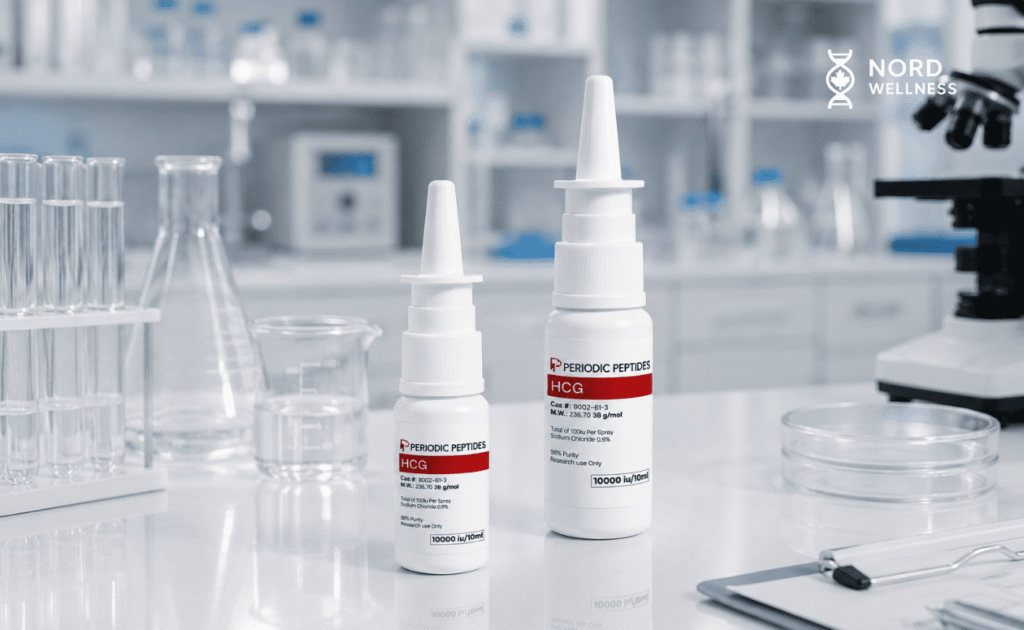
- hCG Nasal Spray: Intranasal Delivery and Research Considerations
FAQ
What Are hCG Peptide?
People commonly search for the phrase “hCG peptide” online, but researchers more accurately describe hCG as a glycoprotein hormone. Scientists explain that it consists of alpha and beta protein subunits with attached carbohydrate chains. These structural features make hCG more complex than a typical short-chain peptide.
Is hCG actually a peptide?
Not exactly. hCG is protein-based, so it is sometimes grouped into peptide-related research discussions. However, scientifically, hCG is a glycoprotein hormone, not a simple peptide. Its structure includes two subunits and glycosylation, which are essential to its function.
What is the structure of hCG?
Researchers describe hCG as a hormone composed of an alpha subunit and a beta subunit. They explain that several other glycoprotein hormones share the alpha subunit, while the beta subunit gives hCG much of its biological specificity.
Why is hCG important in endocrine research?
hCG is important because it interacts with the luteinizing hormone/choriogonadotropin receptor and is involved in reproductive hormone signaling. Researchers study hCG to better understand pregnancy biology, receptor activation, steroid hormone regulation, and glycoprotein hormone function.
How is hCG different from LH?
hCG and LH interact with the same receptor system, but hCG has structural differences, especially in its beta subunit. The beta subunit of hCG includes a carboxy-terminal extension that contributes to its longer half-life compared with LH.
What are common research applications of hCG?
Common research applications include reproductive biology studies, LH receptor signaling research, hormone structure-function analysis, biomarker detection, and endocrine pathway comparison.
How should hCG be stored for research?
Suppliers and manufacturers base storage recommendations on the formulation, but they often store lyophilized hCG at low temperatures, such as -20°C, and protect it from moisture. After reconstitution, they commonly recommend short-term refrigerated storage and advise researchers to avoid repeated freeze-thaw cycles.
Is hCG used for weight loss research?
Researchers and commentators have discussed hCG in weight-related contexts online; however, they should not describe it as a general weight-loss peptide or promote it with unsupported claims. Instead, researchers primarily associate hCG with endocrine and reproductive biology research.
Final Thoughts
So, what are hCG peptide in accurate scientific terms? hCG is best understood as a glycoprotein hormone used in endocrine signaling research, not as a typical peptide. Its alpha and beta subunit structure, glycosylation, receptor interactions, and role in reproductive biology make it an important subject in hormone research.
For more research-focused peptide education, product transparency, and science-driven resources, visit Nord Wellness and explore research-oriented content designed to help readers make more informed decisions.
Disclaimer
This content is provided by Nord Wellness for educational and research purposes only. hCG peptide is not approved for the diagnosis, treatment, cure, or prevention of any disease.



Very informative article with a solid explanation of HCG peptide structure and its research applications. I appreciated how the content stayed educational and science-focused rather than overly promotional, which is rare in this space. The section discussing biological function was especially interesting. Do you think ongoing peptide research could lead to broader therapeutic applications for HCG-related compounds in the future?
Great read and very well organized. The article explained a fairly technical topic in a way that was easy to follow without losing scientific depth. I also liked that it covered both structure and function instead of only focusing on one aspect. It would be interesting to see a follow-up article comparing HCG peptides with other commonly researched peptide compounds.
This article did a really good job clarifying the role of HCG peptides in research and biological studies. There’s so much conflicting information online, so having a well-structured and research-oriented explanation is refreshing. I especially liked the balance between scientific detail and readability. Have researchers discovered any major differences in effectiveness depending on delivery methods or formulation?