
Peptides
Why Skin Aging Process: Your Skin Isn’t Aging — It’s Following the Wrong Instructions
Summarize the article with:
 ChatGPT
 Claude
 Perplexity
 Google AI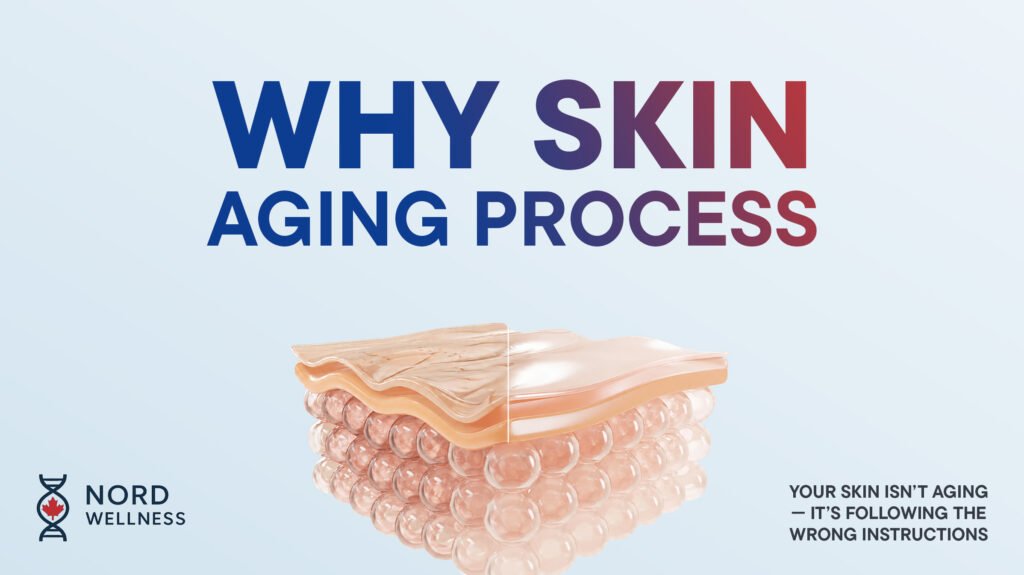
Mar
Most anti-aging science asks the same question: how do we slow the damage in the skin aging process?
GHK-Cu asks a fundamentally different one: what if the skin aging process was never inevitable?
This tiny tripeptide—glycine, histidine, and lysine bound to a copper ion—has been quietly building one of the most compelling research profiles in modern longevity science. It doesn’t just hydrate skin or boost collagen in the conventional sense. According to preclinical and genomic studies, it appears to reset patterns of gene expression associated with the skin aging process. Not slow them. Reset them.
That distinction is worth unpacking.
What Is GHK-Cu, and Why Does Copper Matter?
GHK-Cu (copper peptide GHK) is a naturally occurring compound first isolated from human plasma in 1973 by biochemist Loren Pickart. The body produces it abundantly in youth – plasma concentrations run around 200 ng/mL at age 20. By age 60, that figure drops to roughly 80 ng/mL. That’s not a coincidence. That’s a pattern.
The copper ion isn’t decorative. It’s structurally essential. Without it, GHK’s ability to interact with tissue remodeling enzymes and activate wound healing pathways drops dramatically. Copper is what gives GHK-Cu its remarkable range – from the dermis to the lung to the nervous system.
This is also why purity of the copper-peptide bond matters enormously in research settings. Degraded or improperly synthesized GHK-Cu can contain free copper ions, which behave very differently – and potentially disruptively – compared to the chelated form. At Nord Wellness, all GHK-Cu undergoes independent third-party verification to confirm structural integrity, not just amino acid content.
The Gene Expression Angle in the Skin Aging Process: What Pickart’s Later Research Found
Here is where GHK-Cu separates itself from every other peptide in the anti-aging category. In research conducted by Pickart and colleagues, GHK-Cu modulated over 4,000 human genes in cell culture models.
These changes strongly restored gene expression patterns associated with a younger biological age. Specifically:
- Genes associated with cancer and aggressive cellular behavior were downregulated
- Genes involved in tissue repair, antioxidant defense, and mitochondrial function were upregulated
- The overall transcriptomic profile shifted toward what the researchers described as a “restorative” state – one that more closely resembled younger tissue
This isn’t speculation. Researchers analyzed the data using the Broad Institute’s Connectivity Map (CMap). This database identifies compounds that can shift disease-associated gene expression toward healthy baselines.
What does this mean for research? It suggests GHK-Cu may operate less like a topical treatment and more like a biological signal – one that cells respond to by adjusting how they read their own DNA.
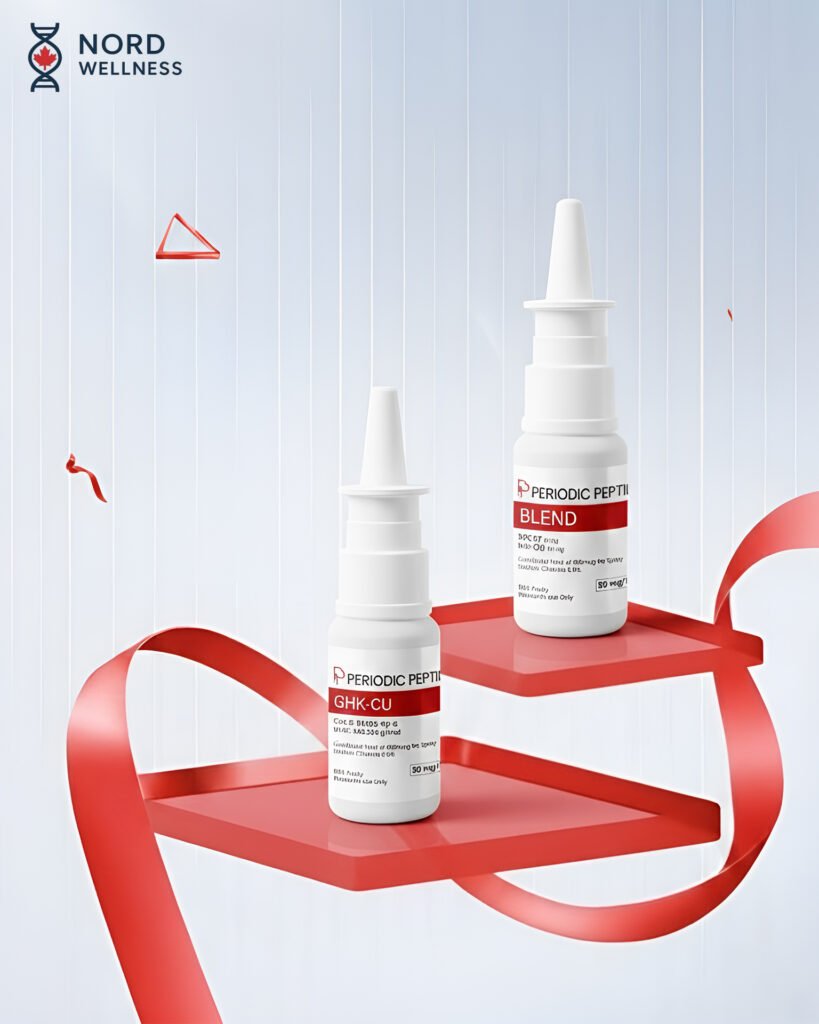
For researchers exploring epigenetic aging and peptide signaling, NordWellness supplies GHK-Cu 50mg with full COA documentation – view the product here.
GHK-Cu Across Systems: Beyond the Skin Aging Process
Most people first encounter GHK-Cu in a skincare context – and the dermatological research is genuinely impressive. In preclinical models, it consistently demonstrates:
- Increased collagen and elastin synthesis via fibroblast stimulation
- Accelerated wound closure and reduced scar formation
- Improved skin density and reduced fine line depth over time
But the research extends far beyond the dermis:
Lung tissue: Studies in rodent models of COPD-like lung damage found GHK-Cu helped restore structural integrity to damaged lung tissue, possibly through its effects on the anti-inflammatory gene LOXL1 and collagen remodeling enzymes.
Nervous system: Neuronal cell culture studies suggest GHK-Cu may support nerve regeneration. It may also reduce oxidative stress markers, drawing attention in neurodegenerative disease research.
Hair follicles: GHK-Cu has been shown to stimulate follicle size and growth rate in preclinical models. It likely works by increasing blood flow and activating growth-promoting pathways within the follicle unit.
Taken together, GHK-Cu starts to look less like a single-use compound and more like a master regulator of tissue homeostasis – one that the body naturally deploys during youth and loses the ability to produce at scale with age.
GHK-Cu in Canada: What Researchers Need to Know
Canadian researchers working with peptide compounds operate in a well-defined regulatory framework. GHK-Cu, like all peptides supplied by Nord Wellness, is sold exclusively for research and laboratory use. It is not approved by Health Canada as a drug or therapeutic agent, and all products include documentation for institutional procurement. They also include materials for ethics board submissions where applicable.
Why source domestically? International peptide shipments—particularly from Asian manufacturers—often face inconsistent customs treatment in Canada. Shipments may be held, destroyed, or subjected to import duties. NordWellness ships from a Canadian fulfillment center, ensuring delivery within 2–5 business days with no customs exposure.
NordWellness also offers GHK-Cu as part of the GLOW Bundle alongside BPC-157 and TB-500 — a popular stack for researchers studying multi-pathway regenerative protocols.
The Purity Problem: Why Most GHK-Cu Research Fails to Replicate
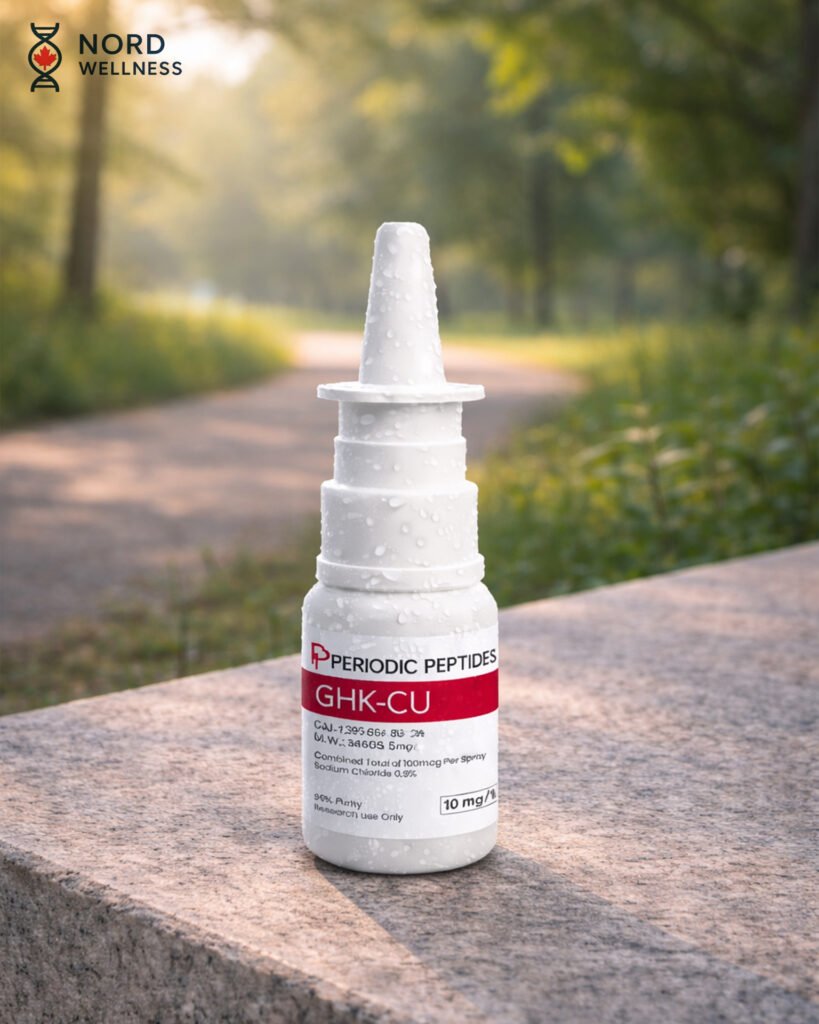
Reproducibility is a significant challenge in peptide research, and GHK-Cu is a particularly sensitive case. The copper chelate is unstable under high temperature, UV exposure, and certain pH conditions. Poorly stored or improperly synthesized batches may contain:
- Degraded GHK backbone with reduced binding affinity
- Free copper (Cu²⁺) ions that generate reactive oxygen species
- Incorrect diastereomers that compete with the active form at receptor sites
None of these failure modes are visible to the naked eye. They require HPLC or mass spectrometry verification – exactly the multi-stage testing NordWellness applies to every production batch.
If your research requires consistent, documented, stable GHK-Cu, starting with a verified source isn’t optional. It’s methodology.
Final Thoughts: GHK-Cu as a Lens Into Longevity Research
The emerging science around GHK-Cu points toward something larger than any single compound: the idea that aging may be partly a failure of biological signaling, not just biological wear. If small peptides can help cells re-read their own DNA with younger eyes, the implications reach far beyond skincare.
NordWellness is committed to supporting that research with the compound quality it demands.
👉 Explore our full peptide catalogue
👉 Contact us for bulk or custom synthesis orders
This content is provided by Nord Wellness for educational and research purposes only. Melanotan II is not approved for the diagnosis, treatment, cure, or prevention of any disease.


Great article—really like the perspective that aging isn’t just damage accumulation but also a change in cellular instructions. The idea that peptides like GHK-Cu can influence gene expression makes the whole process feel much more dynamic than traditional aging theories.
I appreciate how the article moves beyond surface-level skincare and focuses on signaling pathways. Thinking of aging as a signaling problem rather than just structural decline really changes how you look at long-term skin health
Very informative read. I personally see skin aging as a combination of environmental stress and internal signaling changes, so the idea of ‘resetting’ biological instructions instead of just treating symptoms feels like a more forward-looking approach.