Most people have never heard of the thymus gland. Yet thymus gland function is essential to how your immune system works. It sits right behind your breastbone, roughly the size of a walnut in adulthood. During childhood, it’s a highly active organ where immature cells develop into functional T-cells that fight threats.
Without it, your immune system wouldn’t know a cancer cell from a healthy one. It wouldn’t know a virus from harmless tissue. The thymus is, in a very real sense, the brain of your adaptive immune system.
Here’s the part nobody talks about: your thymus starts shrinking around age 20.
By middle age, much of it has been replaced by fat tissue. By your 60s, it’s largely inactive. This process called thymic involution, is one of the primary reasons immune function declines with age, and why older adults are more vulnerable to infections, respond less effectively to vaccines, and face higher cancer risk.
Thymosin Alpha-1 is a peptide the thymus naturally produces to carry out its work. And researchers have been studying what happens when you reintroduce it.
So What Exactly Is Thymosin Alpha-1 and How It Supports Thymus Gland Function?
Thymosin Alpha-1 (abbreviated Tα1, sometimes called Thymalfasin or by its brand name Zadaxin) is a naturally occurring peptide made up of 28 amino acids that plays a key role in thymus gland function. It was first isolated from calf thymus tissue in 1977 and later found to have an identical sequence in humans.
Think of it as a molecular signal – a message the thymus sends out to coordinate immune activity across the body. With Tα1, T-cells mature, immune cells activate, and cytokine responses are triggered. In plain English: it tells your immune system to wake up, get organized, and do its job.
What makes Tα1 especially interesting to researchers is its versatility. It has a pleiotropic mechanism of action – meaning it affects multiple immune cell subsets simultaneously, rather than targeting just one pathway. Most immune compounds are narrow in scope. Tα1 operates more like a conductor than a single instrument.
The “Exhausted T-Cell” Problem: How It Reflects Declining Thymus Gland Function
Here’s a concept that helps explain why Tα1 has attracted so much research attention: T-cell exhaustion.
When your immune system faces a prolonged threat—a chronic virus, a persistent infection, or simply the accumulated stress of aging—T-cells can become functionally exhausted, reflecting a decline in thymus gland function. They’re still present in the bloodstream, but they’ve lost their ability to mount an effective response. They carry markers of burnout (proteins like PD-1 and Tim-3 on their surface) that signal their diminished capacity.
This is a significant problem in elderly patients, people with chronic infections, and cancer patients undergoing immunosuppressive treatment. Their immune cells are present — they’re just not working properly.
Researchers have focused heavily on whether Tα1 can reverse this exhaustion. Studies suggest Thymosin Alpha-1 may improve outcomes by repairing immune damage and preventing excessive T-cell activation. The implication is that Tα1 doesn’t just stimulate immunity — it may help rebalance it, pulling exhausted cells back toward functional states.
What Does the Research Actually Show About Thymus Gland Function and Immune System Support?
Tα1 has one of the most extensive research profiles of any peptide in immunology. Here’s a beginner-friendly overview of where the science currently stands:
Infections and Critical Illness An expert consensus published in 2025 by China’s National Clinical Research Center for Infectious Diseases evaluated Tα1 across liver diseases, viral infections, bacterial infections, and critical illnesses — concluding that it functions as an immune enhancer, modulator, and normalizer by directly or indirectly affecting the quantity and function of various immune cells.
Aging and Immune Decline Preclinical and clinical studies show that Tα1 can improve vaccine response in the elderly and help mitigate immunosenescence — the gradual deterioration of immune function that comes with age. This is a particularly active area of research as global populations age and the limitations of standard vaccines in older adults become more apparent.
Cancer Research Within the anti-tumor context, Tα1 has demonstrated potential as an immune-enhancer, with possible roles in immunotherapy-based treatments. Researchers are actively investigating how Tα1 may complement existing checkpoint inhibitor therapies by preventing the T-cell exhaustion that often limits their effectiveness over time.
Inflammation Regulation A 2025 systematic review and meta-analysis found that Tα1 may alleviate inflammation and help prevent secondary infections in patients with severe acute pancreatitis through immune regulation Nord Wellness — a condition where the immune system’s overreaction to injury is often as damaging as the original disease.
Nord Wellness supplies research-grade Thymosin Alpha-1 with ≥98% purity, third-party COA documentation, and fast Canada-wide shipping. View the product here.
“Is This Like Taking Immune Supplements?”
This is a common question from people first encountering peptide research, and it’s worth addressing directly.
No — Thymosin Alpha-1 is not comparable to vitamin C, zinc, or echinacea. Those supplements support general immune health in a broad, nutritional sense. Tα1 operates at a cellular signaling level, influencing how specific immune cells differentiate, activate, and respond. The mechanisms are fundamentally different in precision and scope.
The more accurate comparison is to biologics — the class of complex, molecule-based compounds used in modern medicine to target specific biological pathways. Tα1 predates the biologic revolution, but its mode of action is consistent with that framework.
It’s also worth noting: Thymalfasin has been approved in several countries and used clinically for treating immunocompromised states, malignancies, and as an enhancer of vaccine response. This is not an obscure experimental compound — it has decades of clinical use behind it, primarily in Asia and parts of Europe.
Curious how Tα1 compares to other immune-focused peptides? Read our full peptide research catalogue or explore our GHK-Cu blog for a deeper look at another powerful immunomodulatory compound.
Why Purity Is Non-Negotiable for Tα1 Research
Thymosin Alpha-1 is a 28-amino-acid peptide—small enough that even minor synthesis errors can significantly alter its biological activity, especially given its role in supporting thymus gland function. Common quality failures in peptide manufacturing include incorrect amino acid sequences, truncated chains, and residual solvents from the synthesis process.
For researchers, this isn’t just an academic concern. Impure or degraded Tα1 produces unreliable results, making it impossible to distinguish a genuine null finding from a contamination artifact.
At Nord Wellness, every batch of Thymosin Alpha-1 is independently verified through third-party HPLC and mass spectrometry testing, with Certificates of Analysis available for download on every product page. For institutions requiring documentation for ethics board submissions or procurement processes, our research team is available to assist — contact us here.
The Bigger Picture: What Tα1 Tells Us About Immunity and Aging
The thymus doesn’t just shrink with age. Its age-related involution is the gradual decrease in size and replacement with fat tissue. This process is linked to weakened immunity, chronic inflammation, and increased risk of age-related diseases.
Thymosin Alpha-1 represents one of the more compelling attempts to address that decline at its source. Not by masking symptoms or broadly stimulating the immune system. But by reintroducing a signal the body once produced abundantly and observing how cells respond.
Whether you’re a researcher investigating immunosenescence, a scientist studying T-cell biology, or simply exploring peptide science. Tα1 is one of the most important compounds to understand.
This content is provided by Nord Wellness for educational and research purposes only. Melanotan II is not approved for the diagnosis, treatment, cure, or prevention of any disease.
admin
3 thoughts on “Thymus Gland Function: The Hidden Organ Running Your Immune System – And Why It Shrinks After Your Teens”
Jonathan Reed says:
Great article—really like how it explains the thymus as the ‘training center’ for T-cells. The idea that most of our immune system is essentially programmed during childhood makes its role much more important than people realize.
I appreciate how the article explains why the thymus shrinks after the teenage years. The shift from producing new T-cells to relying on an existing immune memory really shows how the body adapts over time.
Very informative read. What stands out is how the thymus gradually gets replaced by fatty tissue as part of normal aging, yet it still leaves behind a long-lasting impact on immune function throughout life.
New Year, New You! Ready to kickstart your wellness journey? Join our newsletter for exclusive tips, fitness inspiration, and special offers—let’s make this your best year yet!


 ChatGPT
 Claude
 Perplexity
 Google AI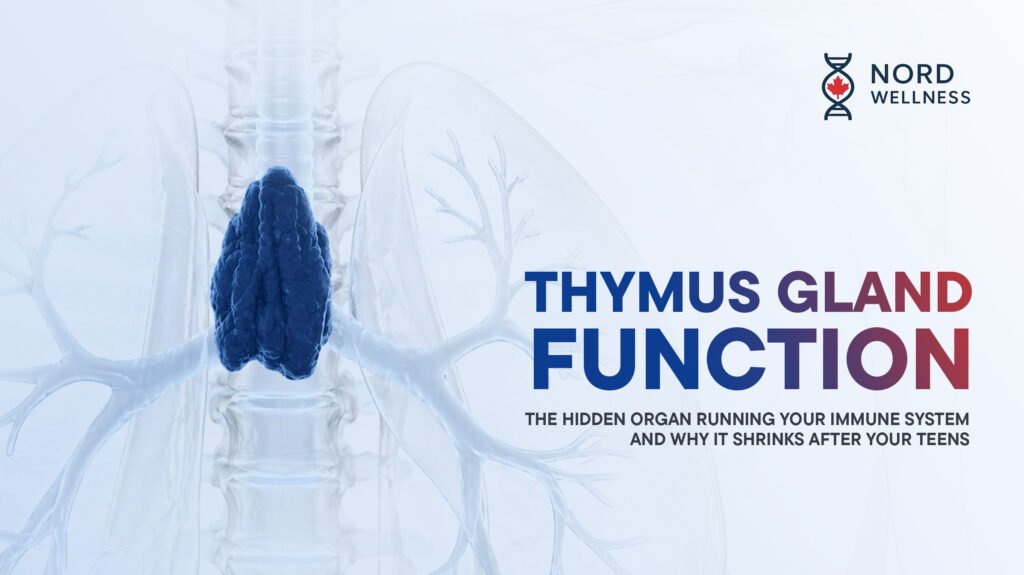



Great article—really like how it explains the thymus as the ‘training center’ for T-cells. The idea that most of our immune system is essentially programmed during childhood makes its role much more important than people realize.
I appreciate how the article explains why the thymus shrinks after the teenage years. The shift from producing new T-cells to relying on an existing immune memory really shows how the body adapts over time.
Very informative read. What stands out is how the thymus gradually gets replaced by fatty tissue as part of normal aging, yet it still leaves behind a long-lasting impact on immune function throughout life.