

Growth Hormone Inducing Peptides, Peptides, Tesamorelin
Tesamorelin and Growth Hormone: Effects on GH Release and Regulation
Summarize the article with:
 ChatGPT
 Claude
 Perplexity
 Google AI
May
The relationship between Tesamorelin and growth hormone is one of the main reasons this peptide is widely discussed in endocrine and metabolic research. Tesamorelin is a synthetic growth hormone-releasing hormone analog, also known as a GHRH analog. Instead of acting as growth hormone directly, Tesamorelin stimulates the pituitary gland to release endogenous growth hormone.
This distinction is important. Tesamorelin does not replace growth hormone. It activates the upstream GHRH pathway, making it valuable for studying GH release, GH pulsatility, IGF-1 response, metabolic regulation, and hormonal feedback systems.
For researchers exploring peptide mechanisms, growth hormone signaling, and endocrine research compounds, Nord Wellness provides educational resources and research-focused peptide information. Visit Nord Wellness
What Is the Relationship Between Tesamorelin and Growth Hormone?
Tesamorelin is closely related to growth hormone because it is designed to stimulate growth hormone release through the GHRH receptor pathway.
The anterior pituitary gland produces growth hormone (GH), and the hypothalamus primarily regulates its release through two key signaling pathways:
| Signal | Main Role |
|---|---|
| Growth hormone-releasing hormone | Stimulates GH release |
| Somatostatin | Inhibits GH release |
Tesamorelin mimics the stimulatory side of this system. Tesamorelin is a synthetic analog of human growth hormone-releasing factor, structurally designed to mimic the body’s natural signal that stimulates the pituitary gland to release GH.
FDA prescribing information describes Tesamorelin as a synthetic human growth hormone-releasing factor analog made from the 44-amino-acid human GRF sequence, with a hexenoyl moiety attached to the N-terminal tyrosine residue.
From a research standpoint, Tesamorelin functions as an upstream regulator of GH secretion rather than as growth hormone itself.
👉 Explore Tesamorelin Peptide for research purposes at: Tesamorelin Peptide
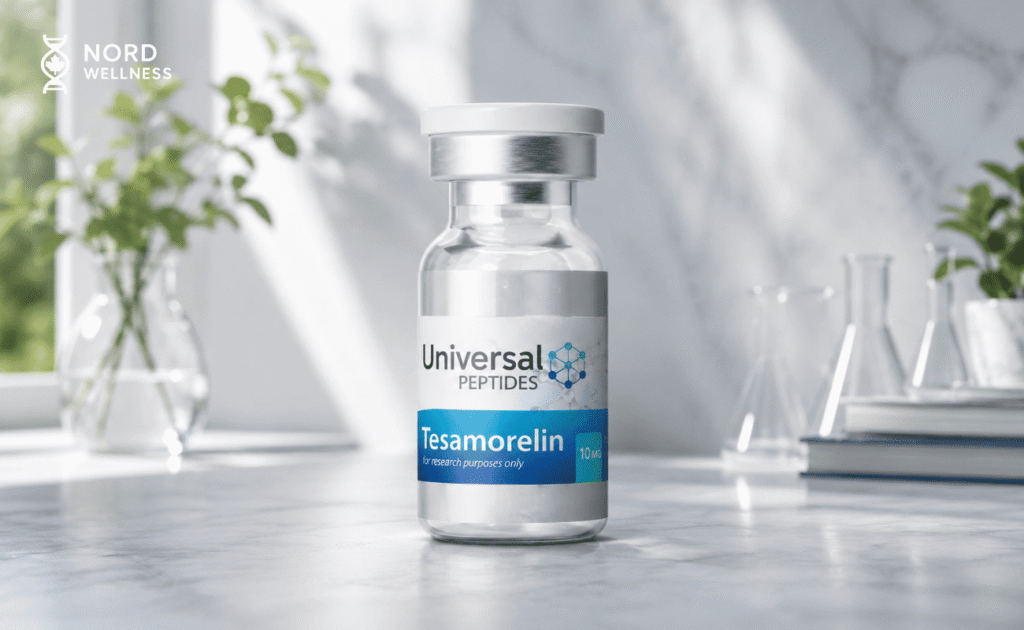
How Tesamorelin Stimulates GH Secretion
Tesamorelin stimulates GH secretion by binding to growth hormone-releasing hormone receptors on somatotroph cells in the anterior pituitary gland. Somatotrophs are the cells responsible for producing and releasing growth hormone.
The process can be summarized as follows:
| Step | Biological Process |
|---|---|
| 1 | Tesamorelin binds to GHRH receptors in the pituitary gland |
| 2 | Receptor activation stimulates intracellular signaling |
| 3 | Somatotroph cells release growth hormone |
| 4 | GH enters circulation |
| 5 | GH acts on tissues, including the liver |
| 6 | IGF-1 production may increase downstream |
FDA labeling states that Tesamorelin stimulates growth hormone secretion and subsequently increases IGF-1 and IGFBP-3 levels. Clinical trials also reported no clinically significant changes in several other pituitary hormones, including TSH, LH, ACTH, and prolactin.
Tesamorelin’s receptor-specific mechanism is why researchers frequently discuss it in the context of GH modulation, pituitary responsiveness, and endocrine signaling.
GH Pulsatility and Hormonal Regulation
The body naturally releases growth hormone in pulses rather than maintaining a flat, constant level throughout the day. Multiple factors regulate GH secretion, including sleep, age, nutritional status, exercise, stress, sex hormones, and hypothalamic feedback signals.
This pulsatile pattern matters because many biological effects of growth hormone depend on timing, amplitude, and frequency of GH release.
Tesamorelin is important in research because it can stimulate endogenous GH secretion while still working through the body’s GHRH receptor pathway. A clinical study on Tesamorelin evaluated its effects on endogenous GH pulsatility and insulin sensitivity in healthy men, highlighting its relevance in studying natural GH release patterns.
Research interest around GH pulsatility may include:
| Research Focus | Why It Matters |
|---|---|
| Pulse amplitude | Shows how strongly GH is released |
| Pulse frequency | Shows how often GH release occurs |
| Pituitary responsiveness | Measures reaction to GHRH-like stimulation |
| IGF-1 response | Reflects downstream GH signaling |
| Feedback regulation | Shows how GH/IGF-1 affects future hormone signaling |
Because Tesamorelin acts upstream, it provides researchers with a way to study growth hormone regulation without directly administering growth hormone itself.
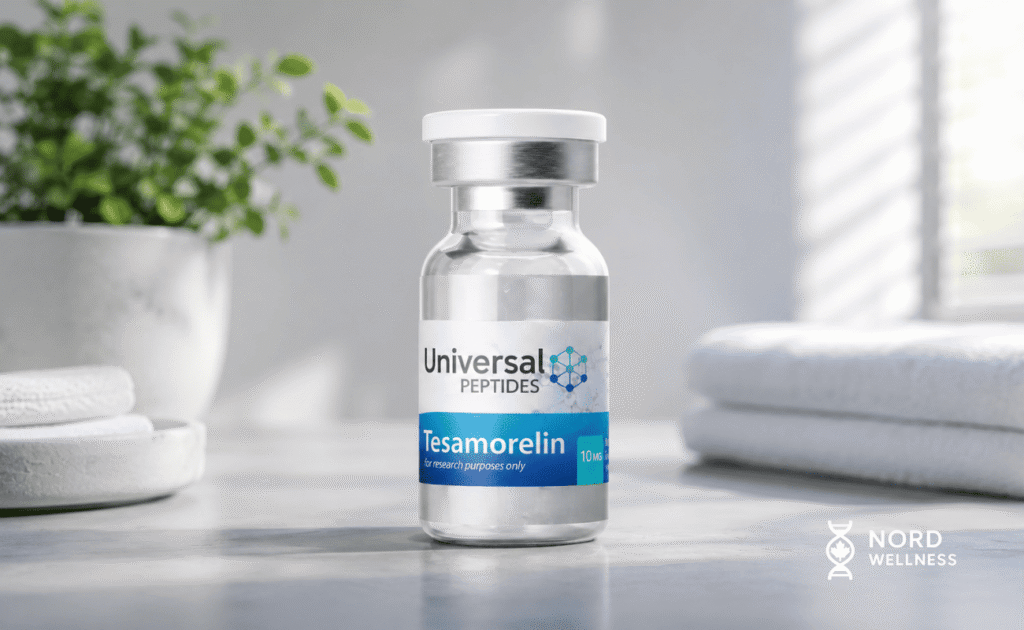
Tesamorelin vs Other GH-Releasing Peptide
Although researchers often compare it with other GH-related peptides, GH-releasing compounds do not all act through the same biological pathway.
Tesamorelin is a GHRH analog. This means it works by mimicking growth hormone-releasing hormone and activating the GHRH receptor.
Other GH-related peptides may work through different systems. For example, some compounds are growth hormone secretagogues that activate the ghrelin receptor, also known as GHS-R1a. These peptides can also influence GH release, but they do so through a different receptor pathway.
| Category | Example Pathway | Main Difference |
|---|---|---|
| GHRH analogs | GHRH receptor | Mimic natural GHRH signaling |
| GH secretagogues | Ghrelin receptor / GHS-R1a | Stimulate GH through a separate receptor system |
| Direct growth hormone | GH receptor activity | Supplies the hormone directly |
| Tesamorelin | GHRH receptor | Stimulates endogenous GH release upstream |
This difference is important for accurate peptide education. Researchers should not broadly categorize Tesamorelin with all “GH peptides,” because these compounds do not all function through the same biological mechanisms. Its defining feature is GHRH receptor activation.
In Canada, clinical review materials note that Tesamorelin is distinct from somatropin, a recombinant human growth hormone, and that somatropin is not approved or used for lipodystrophy treatment in Canada.
Effects on IGF-1 and Downstream Signaling
Tesamorelin stimulates growth hormone (GH) release, which in turn increases IGF-1 signaling as one of its key downstream effects.
IGF-1, or insulin-like growth factor 1, is mainly produced in the liver in response to growth hormone. It acts as a key mediator of many GH-related biological effects. This is why researchers often study Tesamorelin not only by measuring GH, but also by monitoring IGF-1 levels.
The general signaling sequence is:
- Tesamorelin activates GHRH receptors.
- The pituitary releases growth hormone.
- Growth hormone stimulates tissues such as the liver.
- IGF-1 production may increase.
- IGF-1 contributes to downstream endocrine and metabolic signaling.
FDA prescribing information states that Egrifta stimulates GH production and increases serum IGF-1, while also noting that the effects of prolonged IGF-1 elevation are unknown.
In research, IGF-1 is important because it connects GH release to broader biological outcomes, including:
- Protein turnover
- Cellular growth signaling
- Lipid metabolism
- Glucose-related pathways
- Lean tissue research
- Visceral adipose tissue studies
- Endocrine feedback regulation
However, increased IGF-1 should be discussed carefully. It is a meaningful research marker, but it also requires attention to duration, biological context, and safety-related considerations.
Research Insights on GH Modulation
Tesamorelin has been studied most extensively in the context of HIV-associated lipodystrophy and excess visceral adipose tissue. Health Canada issued a Notice of Compliance for Egrifta in 2014, and the Summary Basis of Decision identifies Tesamorelin acetate as the active ingredient in the approved drug product.
However, it is important to avoid overstating Tesamorelin as a general weight loss peptide. Health Canada does not approve Egrifta for weight loss management and recommends its use only in approved cases where patients cannot reduce abdominal fat through diet and exercise alone.
From a research perspective, the strongest insights around Tesamorelin and growth hormone include:
| Research Insight | Explanation |
|---|---|
| Tesamorelin acts upstream | It stimulates GH release through GHRH receptor activation |
| GH response can affect IGF-1 | IGF-1 is a downstream marker of GH activity |
| GH secretion is pulsatile | Tesamorelin is relevant to GH pulse-pattern research |
| Metabolic effects are pathway-dependent | Outcomes may involve lipid, glucose, and energy regulation |
| Research populations matter | Findings from HIV-associated lipodystrophy should not be generalized too broadly |
| Long-term questions remain | Cardiovascular and prolonged IGF-1 effects require careful consideration |
In short, Tesamorelin is best understood as a research compound for studying GH modulation, not as direct growth hormone replacement.
For deeper research insights, read the full Tesamorelin guide from NordWellness: Tesamorelin Peptide: Mechanism, Benefits, and Growth Hormone Research Insights
FAQ
What is the connection between Tesamorelin and growth hormone?
Tesamorelin is connected to growth hormone because it stimulates the pituitary gland to release endogenous growth hormone. It does this by acting as a synthetic GHRH analog.
Is Tesamorelin growth hormone?
No. Tesamorelin is not growth hormone. It is a growth hormone-releasing hormone analog. It stimulates GH release rather than replacing GH directly.
How does Tesamorelin stimulate GH release?
Tesamorelin binds to GHRH receptors on somatotroph cells in the anterior pituitary gland. This receptor activation stimulates the release of endogenous growth hormone.
Does Tesamorelin increase IGF-1?
Yes, Tesamorelin can increase IGF-1 as a downstream effect of growth hormone release. FDA information states that Tesamorelin stimulates GH secretion and subsequently increases IGF-1 and IGFBP-3 levels.
What is GH pulsatility?
The body releases growth hormone in a natural wave-like pattern known as GH pulsatility. Instead of maintaining a constant level, the pituitary gland secretes GH in pulses that vary in timing and intensity.
How is Tesamorelin different from other GH-releasing peptides?
Tesamorelin works through the GHRH receptor pathway. Other GH-releasing peptides may act through different systems, such as the ghrelin receptor. This makes Tesamorelin a GHRH analog rather than a general GH secretagogue.
Is Tesamorelin used for weight loss?
Tesamorelin should not be described as a general weight loss compound. Health Canada product information states that Egrifta is not to be used for weight loss management.
Why is Tesamorelin important in endocrine research?
Tesamorelin is important because it helps researchers study growth hormone release, pituitary responsiveness, IGF-1 signaling, hormonal feedback, GH pulsatility, and metabolic regulation.
Is Tesamorelin for research use only?
We provide these peptide products exclusively for laboratory and educational research purposes. We do not intend them for human consumption, diagnosis, treatment, cure, or disease prevention.
Final Thoughts
The relationship between Tesamorelin growth hormone activity and endocrine regulation is best understood through the GHRH pathway. Tesamorelin acts as a synthetic analog of growth hormone-releasing hormone, stimulating pituitary receptors and encouraging endogenous GH release.
This GH release can then influence IGF-1 signaling, metabolic pathways, and hormonal feedback systems. Because of this upstream mechanism, Tesamorelin is especially useful in research focused on GH modulation, pituitary function, endocrine signaling, and body composition-related pathways.
Disclaimer
This content is provided by Nord Wellness for educational and research purposes only. Tesamorelin Peptide is not approved for the diagnosis, treatment, cure, or prevention of any disease.


Really informative article about how Tesamorelin affects GH release and hormone regulation pathways. I liked that the post focused on the science and signaling mechanisms instead of making exaggerated claims. The explanation of endocrine balance and recovery was especially interesting.
Good breakdown of Tesamorelin’s interaction with growth hormone signaling. A lot of peptide content online feels too simplified, so it was refreshing to read something more research-focused and balanced. Curious if future studies will explore broader metabolic effects connected to GH regulation.
I appreciate how the article connects hormone signaling, recovery, and wellness research into one bigger picture. The section about feedback regulation and endocrine pathways made the topic much easier to understand. It definitely feels like research-based wellness discussions are becoming more common in Canada lately.
Pingback: Tesamorelin Mechanism Explained: GHRH Pathways and Hormone Signaling - nordwellness.ca
Pingback: Tesamorelin Peptide: Mechanism, Benefits, and Growth Hormone Research Insights - nordwellness.ca