

Growth Hormone Inducing Peptides, Peptides, Tesamorelin
Tesamorelin Research Peptide: Applications, Stability & Lab Use
Summarize the article with:
 ChatGPT
 Claude
 Perplexity
 Google AI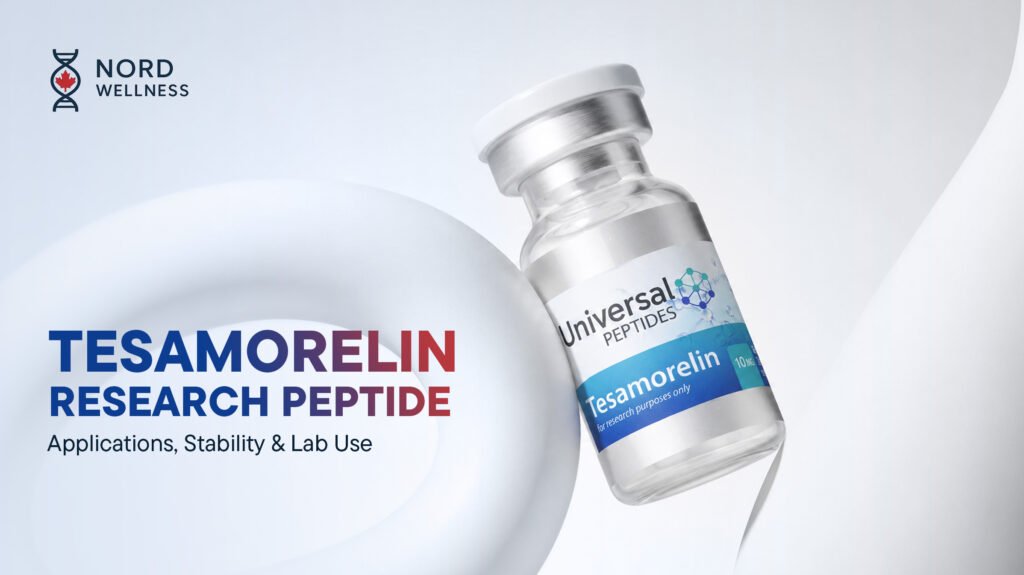
May
Endocrine and metabolic researchers widely study Tesamorelin because of its relationship with growth hormone-releasing hormone pathways. As a tesamorelin research peptide, it is typically studied for its interaction with growth hormone-releasing factor receptors, growth hormone release, IGF-1 signaling, and body composition-related mechanisms.
For researchers looking to better understand peptide mechanisms, stability, and lab-use considerations, Nord Wellness provides educational resources and research-focused peptide information. Visit Nord Wellness
What Is Tesamorelin as a Research Peptide?
Tesamorelin is a synthetic analog of human growth hormone-releasing factor, also known as GRF or GHRH. Researchers primarily value it for its ability to bind to and stimulate human growth hormone-releasing factor receptors, which play a key role in triggering the release of endogenous growth hormone. Health Canada product monograph information describes Tesamorelin as binding and stimulating human GRF receptors with similar potency to natural GRF in vitro.
Structurally, Tesamorelin is based on the 44-amino-acid sequence of human GRF. FDA prescribing information describes it as a synthetic human GRF analog with a hexenoyl moiety attached to the N-terminal tyrosine residue.
In research settings, Tesamorelin is often examined as a tool for studying:
- GHRH receptor activity
- Growth hormone secretion
- GH/IGF-1 axis signaling
- Pituitary hormone response
- Metabolic pathway regulation
- Visceral adipose tissue research models
- Peptide stability and handling
It is important to separate research peptide discussion from medical or consumer-use claims. Researchers should discuss research-grade Tesamorelin within the context of laboratory study, analytical evaluation, and controlled experimental models.
👉 Explore Tesamorelin Peptide for research purposes at: Tesamorelin Peptide
Common Laboratory Applications
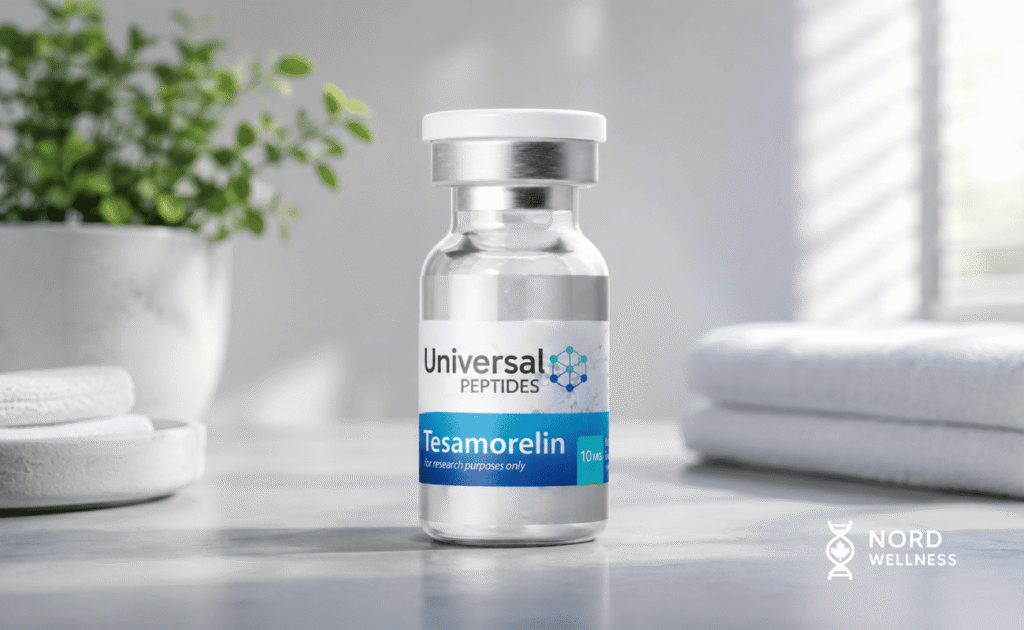
Laboratories that focus on endocrine biology, peptide signaling, metabolic pathways, and body composition-related mechanisms commonly study Tesamorelin.
Because Tesamorelin acts through the GHRH receptor pathway, it is especially useful when researchers want to examine upstream regulation of growth hormone release rather than direct exposure to growth hormone itself.
| Laboratory Application | Research Relevance |
|---|---|
| GHRH receptor studies | Helps evaluate receptor activation and pituitary signaling |
| GH release models | Used to study endogenous growth hormone secretion |
| IGF-1 response research | Supports investigation of downstream GH/IGF-1 signaling |
| Endocrine feedback studies | Useful for examining hormone regulation pathways |
| Metabolic research | Relevant to lipid metabolism, glucose-related pathways, and energy regulation |
| Body composition models | Studied in relation to visceral adipose tissue in specific clinical research contexts |
| Peptide stability evaluation | Useful for storage, handling, and degradation studies |
Tesamorelin is not simply a “fat-loss peptide.” Researchers more accurately characterize it as a GHRH analog for studying growth hormone modulation and downstream endocrine activity.
Tesamorelin in Endocrine and Metabolic Research
Tesamorelin’s most important research value comes from its connection to the hypothalamic–pituitary growth hormone axis.
In normal physiology, the hypothalamus produces growth hormone-releasing hormone and signals the anterior pituitary gland to release growth hormone. This stimulates the synthesis and pulsatile release of endogenous growth hormone. The Canadian product monograph describes this pathway and notes that GHRH acts on pituitary somatotroph cells to stimulate growth hormone synthesis and pulsatile release.
The general pathway can be summarized as:
| Step | Process |
|---|---|
| 1 | Tesamorelin interacts with GHRH receptors |
| 2 | Pituitary somatotroph cells are stimulated |
| 3 | Endogenous growth hormone release increases |
| 4 | Growth hormone influences downstream tissues |
| 5 | IGF-1 signaling may increase |
| 6 | Metabolic and endocrine markers can be studied |
In clinical research, Tesamorelin has been studied in relation to excess visceral abdominal fat in HIV-associated lipodystrophy. However, researchers and clinicians should not describe it as a general weight-loss compound. Health Canada specifically states in its Egrifta product information that the drug is not indicated for weight loss management.
For research content, the more accurate interpretation is that Tesamorelin is relevant to GH-mediated metabolic regulation, IGF-1 signaling, and visceral adipose tissue research in defined study contexts.
Peptide Stability and Handling Considerations
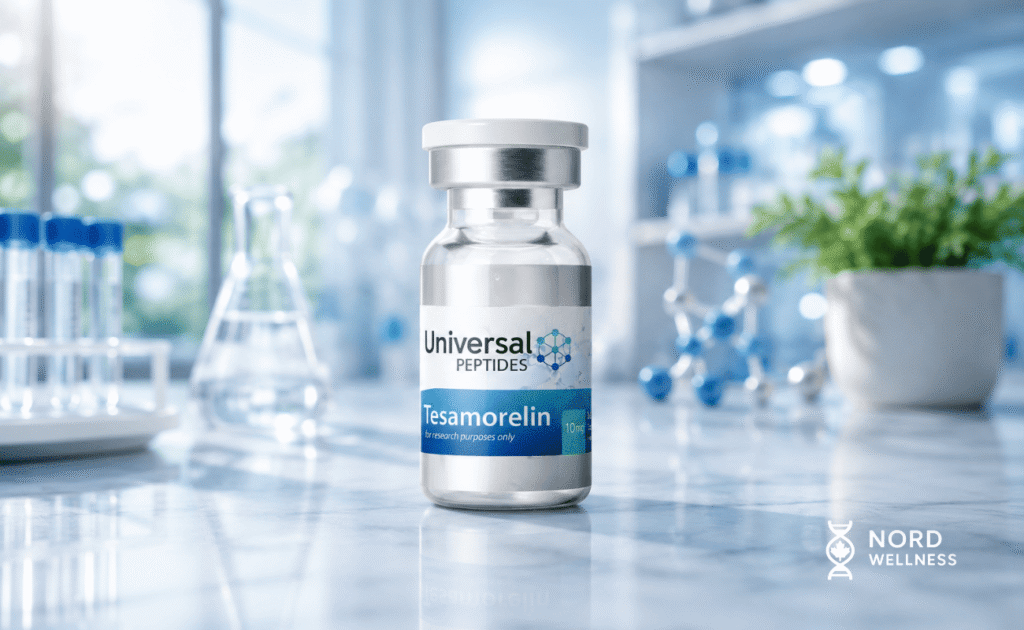
Like many peptides, Tesamorelin requires careful handling in research environments. Heat, moisture, light exposure, contamination, improper solvents, and repeated freeze-thaw cycles can affect peptide stability and integrity.
Research teams typically consider the following factors:
| Stability Factor | Why It Matters |
|---|---|
| Temperature | Heat may accelerate peptide degradation |
| Moisture | Water exposure can affect lyophilized peptide stability |
| Light exposure | Some peptides may be sensitive to direct light |
| Reconstitution solvent | Solvent choice can affect peptide integrity and compatibility |
| Freeze-thaw cycles | Repeated temperature shifts may reduce stability |
| Contamination risk | Sterile technique helps preserve experimental reliability |
| Storage duration | Stability may vary between lyophilized and reconstituted forms |
For pharmaceutical versions, storage and handling instructions are product-specific. DailyMed provides official storage and preparation guidance for the approved Egrifta SV drug product, but researchers should not automatically apply those instructions to all research-grade materials.
For laboratory work, researchers should always follow:
- Supplier documentation
- Certificate of analysis
- Batch-specific storage recommendations
- Institutional lab protocols
- Validated reconstitution procedures
- Stability data, when available
Storage and Reconstitution Guidelines
Storage and reconstitution are critical for maintaining the integrity of a tesamorelin research peptide sample.
Researchers and laboratories commonly store lyophilized peptide materials in cool, dry, and light-protected conditions until use. Once reconstituted, peptide solutions are usually more sensitive and may require stricter handling.
General research-focused considerations include:
| Form | Research Handling Consideration |
|---|---|
| Lyophilized powder | Protect from heat, light, moisture, and contamination |
| Reconstituted solution | More sensitive to degradation; handle according to lab protocol |
| Aliquoted samples | May help reduce repeated freeze-thaw exposure |
| Working solutions | Should be clearly labeled with concentration, solvent, date, and batch |
| Long-term storage | Should follow supplier-specific stability guidance |
It is important not to generalize pharmaceutical product instructions to every research peptide product. FDA and DailyMed instructions apply to specific approved formulations, packaging, and excipients, while research-grade peptides may differ in format, purity, and handling requirements.
A strong lab workflow may include:
- Reviewing the COA before use
- Confirming peptide identity and purity
- Recording lot number and storage date
- Using validated solvents only
- Avoiding unnecessary agitation
- Minimizing exposure to room temperature
- Preparing aliquots when appropriate
- Documenting concentration and handling conditions
These steps help improve consistency across experiments and reduce variability caused by degradation or improper handling.
Quality and Research-Grade Standards
For research peptide work, quality control is one of the most important considerations. Manufacturers and suppliers may produce Tesamorelin products with varying levels of purity, different counterion forms, residual solvents, water content, peptide integrity, and supporting analytical documentation, even when they use the same product label.
Manufacturers and suppliers should support reliable research-grade peptides with clear documentation, including:
| Quality Standard | Why It Matters |
|---|---|
| Certificate of Analysis | Confirms batch-specific testing information |
| HPLC purity testing | Helps assess peptide purity profile |
| Mass spectrometry | Supports molecular identity confirmation |
| Lot number tracking | Allows traceability between experiments |
| Storage instructions | Helps preserve sample integrity |
| Reconstitution notes | Supports experimental consistency |
| Research-use disclaimer | Clarifies that the material is not for human use |
For Tesamorelin specifically, identity matters because it is a defined synthetic GRF analog with a known peptide structure. FDA labeling identifies Tesamorelin acetate as having the molecular formula C221H366N72O67S · x C2H4O2 and a molecular weight of 5135.9 Da as the free base equivalent.
For researchers, this means analytical verification is not just a formality. It helps ensure the compound being studied matches the expected peptide identity and supports reproducible results.
For deeper research insights, read the full Tesamorelin guide from NordWellness: Tesamorelin Peptide: Mechanism, Benefits, and Growth Hormone Research Insights
FAQ
What is Tesamorelin as a research peptide?
Tesamorelin is a synthetic growth hormone-releasing factor analog used in research related to GHRH receptor activity, growth hormone release, IGF-1 signaling, endocrine regulation, and metabolic pathways.
Is Tesamorelin the same as growth hormone?
No. Tesamorelin is not growth hormone. It is a GHRH analog that stimulates the pituitary gland to release endogenous growth hormone.
What are common laboratory applications of Tesamorelin?
Common research applications include GHRH receptor studies, GH release models, IGF-1 signaling research, endocrine feedback studies, metabolic research, and body composition-related research models.
Why is Tesamorelin studied in endocrine research?
Tesamorelin is studied because it activates an upstream endocrine pathway involving GHRH receptors, pituitary stimulation, growth hormone release, and downstream IGF-1 signaling.
How should Tesamorelin research peptide be stored?
Storage requirements depend on the product form and the supplier’s instructions. In general, researchers should protect lyophilized peptides from heat, light, and moisture. Researchers should handle reconstituted peptide solutions with greater care, as these preparations are typically more sensitive and should follow validated laboratory handling procedures.
Can pharmaceutical storage instructions be applied to research peptides?
Not necessarily. Manufacturers formulate approved pharmaceutical products with specific excipients, packaging, and validated handling instructions. Researchers should handle research-grade peptides according to supplier documentation, COA specifications, and established laboratory protocols.
What quality documents should researchers look for?
Researchers should look for a certificate of analysis, HPLC purity data, mass spectrometry confirmation, lot number, storage guidance, and research-use documentation.
Is Tesamorelin used for weight loss?
Health Canada specifically states in its Egrifta product information that researchers and clinicians should not describe Tesamorelin as a general weight-loss peptide because the drug is not indicated for weight loss management.
Is Tesamorelin for research use only?
Manufacturers typically provide research peptide products exclusively for laboratory and educational research purposes. They do not intend these products for human consumption, diagnosis, treatment, cure, or disease prevention.
Final Thoughts
Tesamorelin research peptide is best understood as a synthetic GHRH analog used to study growth hormone release, IGF-1 signaling, endocrine regulation, metabolic pathways, and peptide stability. Its value in research comes from its upstream mechanism: it interacts with GHRH receptors and supports investigation of the body’s natural growth hormone signaling pathway.
For accurate research use, quality control and handling matter. Researchers should pay close attention to purity data, COA documentation, storage conditions, reconstitution protocols, and batch traceability.
Disclaimer
This content is provided by Nord Wellness for educational and research purposes only. Tesamorelin Peptide is not approved for the diagnosis, treatment, cure, or prevention of any disease.


Really informative article about Tesamorelin research applications and peptide stability in lab environments. I liked that the post focused on handling, storage, and research consistency instead of only discussing mechanisms. The section about maintaining peptide integrity during lab use was especially useful.
Good breakdown of Tesamorelin stability and research-related handling considerations. A lot of online content overlooks how important storage conditions and lab procedures are for peptide quality. Curious if future research will establish more standardized protocols for long-term peptide stability testing.
I appreciate how the article approaches Tesamorelin from a research-quality and lab-use perspective instead of focusing only on trends. The discussion about peptide stability, endocrine research, and proper handling made the topic feel much more credible and educational. It definitely seems like research-based wellness discussions are becoming more detailed lately.
Pingback: Tesamorelin Mechanism Explained: GHRH Pathways and Hormone Signaling - nordwellness.ca
Pingback: Tesamorelin Peptide: Mechanism, Benefits, and Growth Hormone Research Insights - nordwellness.ca