

Immune & Specialized Peptides, Peptides, VIP
VIP Peptide: Function, Mechanism, and Research Applications
Summarize the article with:
 ChatGPT
 Claude
 Perplexity
 Google AI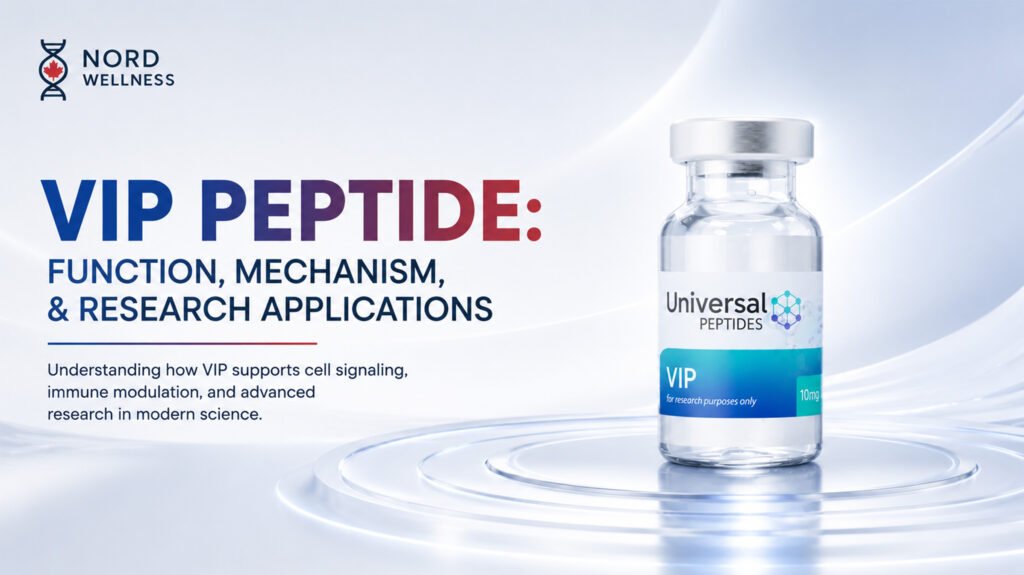
May
Vasoactive Intestinal Peptide, commonly known as VIP peptide, is a naturally occurring neuropeptide studied for its role in cellular communication, smooth muscle regulation, immune signaling, and neuroendocrine activity. In research settings, VIP is especially interesting because it connects multiple biological systems, including the nervous system, gastrointestinal tract, respiratory system, cardiovascular regulation, and immune response.
For researchers exploring peptide signaling pathways, Nord Wellness provides educational resources and research-focused peptide information to support a deeper understanding of compounds such as VIP peptide.
What Are VIP Peptide?
VIP peptide refers to Vasoactive Intestinal Peptide, a 28-amino-acid peptide originally identified for its effects on intestinal and vascular function. Although its name suggests a primary relationship with the intestine, VIP is widely distributed throughout the body and is involved in many forms of biological regulation.
Research literature commonly describes VIP as a neuropeptide, immunomodulatory peptide, and regulatory signaling molecule. Researchers have identified VIP in the central and peripheral nervous systems, as well as in tissues such as the gut, lungs, pancreas, and immune-related cells. VIP belongs to the glucagon-secretin peptide family and mainly interacts with VPAC receptors, which belong to the G protein-coupled receptor family.
From a research perspective, VIP peptide is not studied as a single-purpose compound. Instead, it is explored as a multi-system signaling peptide that may influence how cells communicate, respond to stress, regulate inflammation-related pathways, and coordinate physiological balance.
Structure and Role of Vasoactive Intestinal Peptide
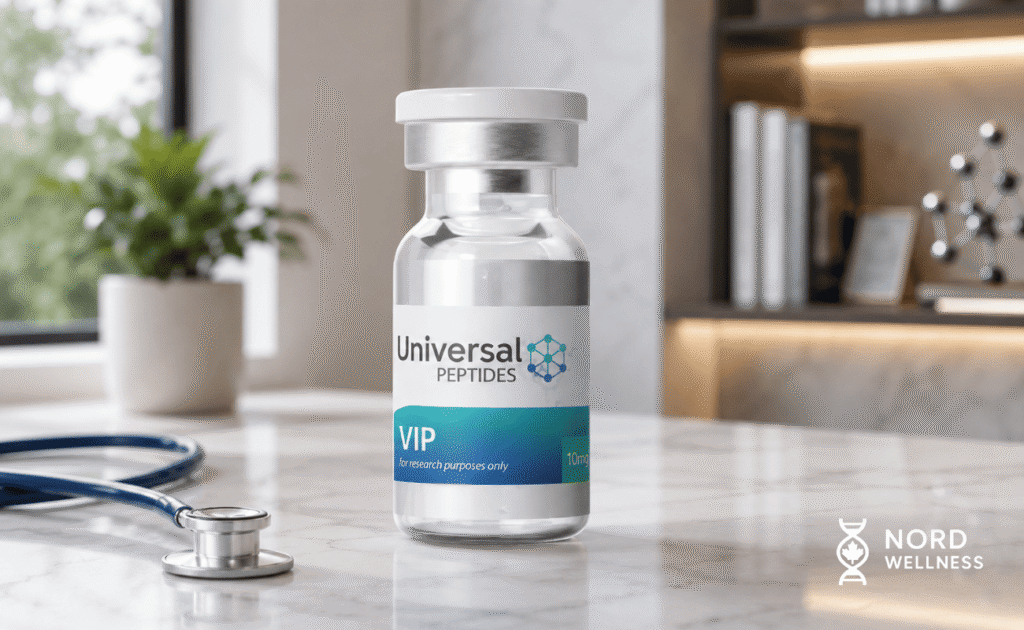
VIP contains 28 amino acids, making it a relatively short peptide with broad biological activity. Its structure allows it to bind to specific receptors on target cells, especially VPAC1 and VPAC2 receptors. Both VIP and PACAP, another related peptide involved in neuroendocrine signaling, can activate these receptors.
The term “vasoactive” refers to VIP’s observed role in vascular relaxation and blood flow regulation in experimental models. However, its function extends far beyond vascular activity. Research has also associated VIP with:
- smooth muscle relaxation
- gastrointestinal signaling
- respiratory tissue regulation
- immune cell communication
- endocrine and pancreatic signaling
- neuronal protection and signaling balance
- circadian and neuroendocrine regulation
Because VIP interacts with receptors found in many tissues, researchers often study it as a peptide that helps coordinate communication between the nervous, endocrine, and immune systems.
VIP in Cellular Signaling and Regulation
The mechanism of VIP peptide is mainly receptor-mediated. After VIP binds to VPAC1 or VPAC2 receptors, these receptors activate intracellular signaling pathways, particularly those involving adenylyl cyclase and cyclic AMP, often abbreviated as cAMP. This pathway plays an important role in transmitting signals from the cell surface to internal cellular machinery.
In simplified terms, VIP signaling often follows this sequence:
| Step | Research Explanation |
|---|---|
| VIP binds to receptor | VIP interacts with VPAC1 or VPAC2 on the cell surface |
| Receptor activation | The receptor activates G protein-related signaling |
| cAMP pathway response | Adenylyl cyclase activity increases, raising cAMP levels |
| Cellular regulation | Downstream cellular processes are influenced |
| Tissue-level effect | Changes may be observed in smooth muscle tone, secretion, immune signaling, or neuroendocrine activity |
This makes VIP peptide valuable in experimental research because it allows scientists to examine how receptor activation affects cell behavior. For example, VPAC1 and VPAC2 receptor signaling has been studied in relation to smooth muscle relaxation, exocrine secretion, immune modulation, and metabolic regulation.
Importantly, VIP does not act in isolation. Its activity often overlaps with PACAP-related pathways, which is why VIP/PACAP receptor systems are commonly studied together.
Physiological Functions of VIP in Research Models
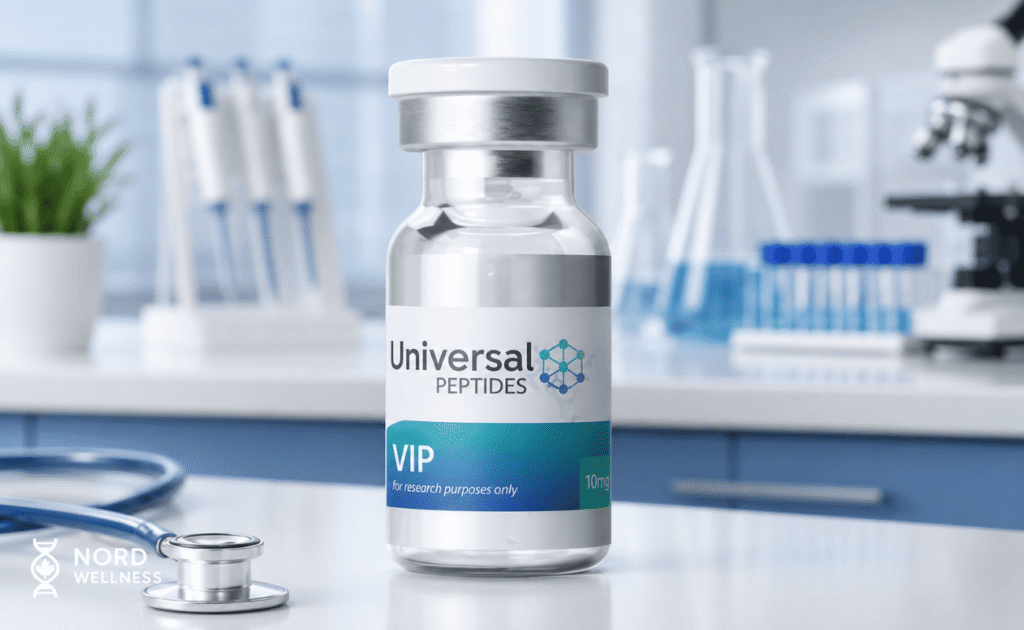
VIP peptide has been investigated across several physiological systems. Its wide distribution makes it relevant to many research models, particularly those focused on regulation, communication, and homeostasis.
Gastrointestinal Function
Researchers first associated VIP with intestinal activity, and the gastrointestinal system remains one of the major areas of VIP research. In experimental models, researchers associate VIP with smooth muscle relaxation, intestinal secretion, and motility regulation. This makes VIP relevant to studies involving gut-brain communication and digestive signaling.
Respiratory and Smooth Muscle Regulation
Researchers also study VIP in respiratory tissues because of its relationship with smooth muscle relaxation and airway regulation. Pulmonary tissues contain VIP receptors, and researchers have examined VIP-related signaling in models involving bronchial tone, vascular relaxation, and inflammatory communication within respiratory environments.
Immune System Communication
One of the most important research areas for VIP peptide is immune regulation. VIP has been studied for its ability to influence immune cell signaling, cytokine-related pathways, and inflammatory response patterns. Reviews have described VIP as an immunomodulatory peptide with relevance to neuroimmune communication.
Rather than acting as a simple “anti-inflammatory” compound, VIP appears to participate in complex signaling networks that help regulate immune balance. This distinction matters because research peptides should be discussed through mechanisms and pathways, not guaranteed outcomes.
Neuroendocrine Signaling
VIP is present in the nervous system and helps coordinate communication between neurons, endocrine tissues, and peripheral organs. Researchers have studied VIP in relation to circadian biology, stress response, hormone-related signaling, and neuroprotective mechanisms.
Metabolic and Pancreatic Research
Researchers have also investigated VIP in metabolic research, particularly because they associate VPAC2 receptor activity with glucose-dependent insulin secretion in experimental contexts. This makes VIP and VIP receptor signaling relevant to studies of endocrine function and metabolic regulation.
👉 Explore VIP Peptide for research purposes at VIP peptide
Common Research Applications of VIP Peptide
Because VIP peptide affects multiple signaling systems, researchers use it in different experimental contexts. The most common research applications include:
1. Receptor Signaling Studies
VIP is frequently used to study VPAC1 and VPAC2 receptor activation. Researchers may examine how these receptors influence cAMP production, kinase signaling, gene expression, and downstream cellular responses.
2. Neuroimmune Research
VIP is often studied in models where the nervous and immune systems interact. This includes research into how neuropeptides influence immune cell behavior, cytokine signaling, and inflammatory regulation.
3. Smooth Muscle and Vascular Models
Because VIP links to smooth muscle relaxation and vascular activity, researchers use it in studies involving vascular tone, respiratory tissue behavior, and gastrointestinal motility.
4. Endocrine and Metabolic Models
VIP receptor activity has been studied in relation to pancreatic signaling, glucose-dependent insulin secretion, and hormone-related pathways. This area is especially connected to VPAC2 receptor research.
5. Cell Culture and Mechanistic Studies
In laboratory settings, VIP peptide may be used to observe how specific cell types respond to receptor activation. Researchers may measure changes in cAMP, gene expression, secretion patterns, inflammatory markers, or receptor sensitivity.
6. VIP/PACAP Pathway Research
Because VIP and PACAP share receptor activity through VPAC1 and VPAC2, researchers often study them together. This helps clarify receptor selectivity, signaling strength, and tissue-specific responses.
Storage, Stability, and Research Considerations
Like many peptides, VIP peptide requires careful handling to preserve stability and experimental consistency. Peptide degradation can occur due to moisture, heat, repeated freeze-thaw cycles, inappropriate pH, oxidation, or microbial contamination after reconstitution.
In general peptide handling guidance, lyophilized peptides are more stable than peptides in solution. Research suppliers commonly recommend storage at low temperatures, protection from light, and minimizing exposure to moisture. Once reconstituted, peptide solutions typically have a shorter usable window and may require refrigerated or frozen aliquots depending on the peptide, solvent, and research protocol.
A practical research-focused approach includes:
| Factor | Best-Practice Consideration |
|---|---|
| Lyophilized form | Store cold, dry, and protected from light |
| Reconstituted form | Use sterile technique and appropriate solvent |
| Freeze-thaw cycles | Avoid repeated cycles by preparing aliquots |
| Light exposure | Minimize direct light exposure during handling |
| Moisture | Allow vial to reach room temperature before opening to reduce condensation |
| Documentation | Track batch, concentration, solvent, date of reconstitution, and storage conditions |
For VIP peptide specifically, researchers should also consider receptor selectivity, concentration-dependent effects, short biological half-life, and model-specific variability. A response observed in one cell line, animal model, or tissue system may not translate directly to another.
As with other research peptides, researchers should handle VIP peptide according to appropriate laboratory standards and use it only for research or educational purposes where applicable.
👉 Explore VIP Peptide for research purposes at VIP peptide
Why VIP Peptide Matters in Research
VIP peptide is scientifically valuable because it sits at the intersection of several major biological systems. It is not limited to one pathway or one tissue. Instead, VIP helps researchers investigate how cells coordinate complex responses through receptor-mediated signaling.
Its importance comes from three key factors:
First, VIP has broad receptor distribution, meaning its signaling can be studied in many tissue types. Second, it activates well-characterized pathways such as cAMP signaling, making it useful for mechanistic research. Third, VIP is closely connected to neuroimmune and neuroendocrine communication, two areas that continue to attract scientific interest.
For researchers, this makes VIP peptide a useful tool for studying regulation, communication, and biological balance at the cellular level.
To explore more educational peptide resources, visit Nord Wellnes and learn more about research peptides, peptide mechanisms, and laboratory-focused considerations.
👉 SEE MORE:
- How VIP Works: Cellular Signaling and Physiological Effects Explained
- VIP Mechanism Explained: Receptor Interaction and Signaling Pathways
- VIP Nasal Spray: Intranasal Delivery and Research Considerations
FAQ – VIP Peptide
What is VIP peptide?
VIP peptide stands for Vasoactive Intestinal Peptide. It is a 28-amino-acid neuropeptide studied for its role in cellular signaling, smooth muscle regulation, immune communication, and neuroendocrine activity.
What does VIP peptide do in research models?
In research models, VIP is studied for its effects on VPAC receptor activation, cAMP signaling, smooth muscle relaxation, immune modulation, gastrointestinal regulation, and neuroendocrine communication.
What receptors does VIP peptide bind to?
VIP primarily binds to VPAC1 and VPAC2 receptors. These are G protein-coupled receptors involved in intracellular signaling pathways such as cAMP activation.
Is VIP peptide the same as PACAP?
No. VIP and PACAP are related peptides, and both can interact with VPAC1 and VPAC2 receptors. However, PACAP also has high affinity for PAC1 receptors, while VIP has much lower affinity for PAC1.
Why is VIP peptide important in immune research?
VIP is important in immune research because it is involved in neuroimmune communication. Studies have explored how VIP signaling may influence immune cell behavior, cytokine-related pathways, and inflammatory response regulation.
How should VIP peptide be stored?
In general, researchers should store lyophilized peptides in cold, dry, light-protected conditions. Reconstituted peptide solutions are less stable, so researchers should typically aliquot them to avoid repeated freeze-thaw cycles. Exact storage conditions depend on the supplier’s documentation and research protocol.
Is VIP peptide used for medical treatment?
This article discusses VIP peptide from a research and educational perspective only. Writers should not describe research peptides as approved treatments unless pharmaceutical frameworks specifically regulate and approve them.
Final Thoughts
VIP peptide is a highly relevant compound in peptide research because it connects several major biological systems, including cellular signaling, immune communication, smooth muscle regulation, gastrointestinal function, respiratory models, and neuroendocrine pathways. Its primary interaction with VPAC1 and VPAC2 receptors makes it especially valuable for studying cAMP-mediated signaling and receptor-driven cellular responses.
However, VIP should be understood within a research-focused framework. Its biological activity is complex, tissue-dependent, and influenced by receptor distribution, experimental model, concentration, and handling conditions. For this reason, accurate discussion should focus on mechanisms, signaling pathways, and laboratory applications rather than simplified claims or guaranteed outcomes.
For researchers and educational readers exploring peptide mechanisms, VIP peptide offers an important example of how one regulatory peptide can influence multiple systems through highly specific receptor interactions. To continue learning about research peptides, peptide stability, and mechanism-based applications, visit Nord Wellnes for more science-focused peptide education.
Disclaimer
This content is provided by Nord Wellness for educational and research purposes only. VIP peptide is not approved for the diagnosis, treatment, cure, or prevention of any disease.


This was a really informative explanation of VIP peptide function and signaling mechanisms. I liked how the article balanced scientific detail with readability, especially in the sections discussing cellular communication and research applications. It would be interesting to see future content comparing VIP with other neuroimmune-related peptides being studied today.
Great article overall. A lot of peptide blogs tend to oversimplify signaling pathways, but this one explained the mechanisms in a much more professional and structured way. The discussion around immune and neurological interaction made the topic especially engaging to read.
Really appreciated the research-focused approach of this article. The explanation of VIP peptide interactions and signaling responses was detailed enough to feel credible while still staying accessible for readers outside of a scientific background. Looking forward to reading more advanced peptide science content from Nord Wellness.
Pingback: How VIP Works: Cellular Signaling and Physiological Effects Explained - nordwellness.ca
Pingback: VIP Mechanism Explained: Receptor Interaction and Signaling Pathways - nordwellness.ca
Pingback: VIP Nasal Spray: Intranasal Delivery and Research Considerations - nordwellness.ca